
 About
About Deals
Deals Articles
 Genres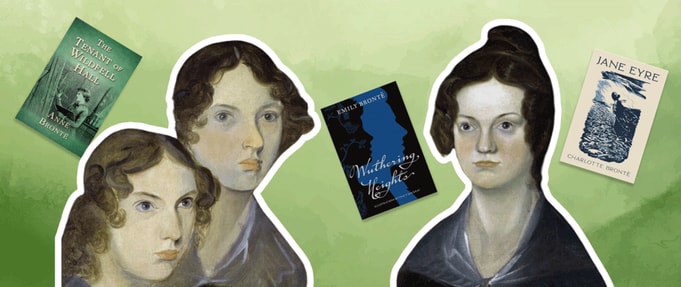
The Brontë sisters are easily among the most famous literary figures in history. Praised for writing intense, passionate, and often scandalous narratives—to the shock of the Victorians—their works have become staples in education and the greater popular culture.
Growing up in the Yorkshire moors, Charlotte, Emily, Anne, and their three other siblings did not have it easy. Their father, Clergyman Patrick Brontë, came from humble origins and, after his wife's death, expected his children to earn their keep. He sent his three oldest daughters to Clergy Daughters' School, among them was Charlotte, who would document the horrific conditions she experienced in the infamous Jane Eyre.
In 1825, Maria and then Elizabeth caught tuberculosis while at school, leading to their eventual deaths, and the assumption of Charlotte as the eldest daughter. Upon losing two of his daughters, Patrick decided to teach his children at home, where the rigid structure of boarding school didn’t exist, and their imaginations could run wild.
The children created make-believe worlds, with Charlotte and her brother, Patrick, conjuring up Glass Town, while Emily and Anne imagined the queendom of Gondal. In miniature books, the children recorded their creations, with many of these ramblings finding their way into future stories.
Throughout their literary careers to come, the girls would write under male pseudonyms—Charlotte was Currer, Emily was Ellis, and Anne was Acton—with Charlotte explaining the choice as the following: “we had a vague impression that authoresses are liable to be looked on with prejudice.” In short, women were not taken seriously in society, let alone in publishing, and experienced rampant sexism.
Only in 1850, after Charlotte had lost her three remaining siblings in nine months, did she reveal the sisters' identities in the preface to Emily’s Wuthering Heights and Anne’s Agnes Grey. None of the children, let alone the literary sisters, lived to see 40, and yet their work remains as an enduring legacy of their brilliance.
Perhaps the sisters' most profound contribution to literature is their development of the gothic genre, one that many have come to cherish and see spotlighted across art forms, even beyond the novel. They were also among the pioneers of 19th-century feminist literature—albeit a privileged and distinctly white iteration of it (more on that later).
Nevertheless, they artfully tackled subjects like domestic violence, women's right to independence, and critiques of marriage, paving the way for future feminist thinkers, such as Simone de Beauvoir and her landmark work The Second Sex. Even by picking up the quill, the sisters were forcing their way through a male-dominated profession, disregarding comments like this one Charlotte received from English poet laureate Robert Southey: “literature cannot be the business of a woman’s life, and it ought not to be.”
Concerning the question of where to start with the Brontë sisters, it’s no surprise opinions vary widely. Readers often have a favorite among them, yet each sister offers her own distinct brilliance and impression. Whether you choose to read chronologically or start with the so-called greatest hits, there’s no wrong approach!
If you’re looking for a guide, consider the list below, which includes additional reading and criticism along the way. Together, these selection trace not only the genius of the Brontë sisters but also their enduring contributions to the broader canon of English literature.
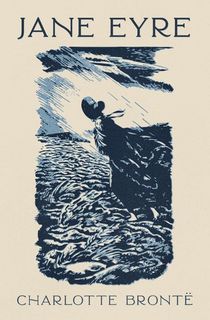
Charlotte Brontë: Jane Eyre
The first time I read Jane Eyre during my undergraduate studies, I remember being genuinely shocked. The novel’s dark secret, hidden within the walls of Thornfield Hall, set against the sweet and unassuming Jane, was not at all what I anticipated from a Victorian novel.
It’s an exciting, technically remarkable, and also incredibly disturbing read—a side of the novel that is less explored, in favor of its gothic romance. I’ve read the novel on multiple occasions, and each time, something new presents itself to me, like a spiralling maze, much like the manor in which the novel is set.
Jane Eyre follows the titular character as she navigates a life marked by cruelty and unbelonging, beginning with her heartless aunt and cousin. As a result, Jane learns to never rely on anyone beyond herself—that is, until she arrives at Thornfield Hall as a governess and meets the complex Mr. Rochester.
Quickly, feelings begin to arise and deepen, but a shocking secret forces Jane to choose between the man she loves and starting a new life altogether.
The novel has been the source of much criticism and, perhaps alongside Wuthering Heights, is the most studied of the Brontë novels. Jane Eyre, however, was an immediate success, unlike Emily’s novel, and only later did sustained, thoughtful criticism emerge—particularly around the novel's secret (which I’ll keep vague for first readers).
In terms of criticism, Gayatri Chakravorty Spivak’s landmark essay “Three Women’s Texts and a Critique of Imperialism” is an absolute must-read. While earlier critics tended to view a certain character (again, staying vague) as an extension of Jane, Spivak instead considers the character’s racialized, colonial identity.
Although many have come to view Charlotte’s work as one of female empowerment, Spivak argues that such a reading relies on the erasure of said character.
That being said, I consider Jane Eyre the perfect place to start with the sisters, as it has generated an extraordinary amount of fruitful discussion, one that scholars and readers alike have returned to, engaged with, and contributed to over time.
Jane Eyre
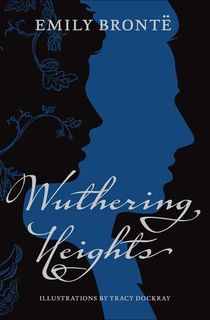
Emily Brontë: Wuthering Heights
Emily wrote only one novel, yet it’s arguably the most iconic of all the sisters' works. I’m sure you’ve seen or at least heard of the new film adaptation starring Margot Robbie and Jacob Elordi that’s causing quite a stir—notably for doing away with elements central to the book’s premise.
Wuthering Heights is, in simple terms, the classic tale of star-crossed lovers. Catherine is the carefree daughter of an aristocratic family, and one day, her father brings home an orphan named Heathcliff. Soon enough, a passionate, turbulent affair blooms between the pair, as they weave in and out of each other’s lives through time.
It’s effectively a story within a story, as the novel oscillates between the past and present, with the tale told by the unreliable narrators: Lockwood, Heathcliff's tenant, and Ellen Dean, a maid. Although often characterized as a romance, the novel is not a typical love story, especially in the modern sense.
As is characteristic of the gothic genre, Wuthering Heights is deeply dark and tragic, with the moors setting, in many ways, taking on the shape of a character, imposing on and mystifying the plot.
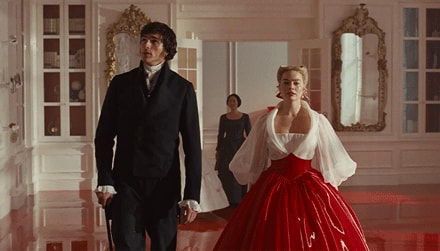
 Photo Credit: Warner Bros. Pictures
Unlike her sister's novel, Jane Eyre, critics were absolutely appalled by Wuthering Heights. As referenced by the Smithsonian, a reviewer for Douglas Jerrold’s Weekly Newspaper wrote, “The reader is [...] disgusted, almost sickened by details of cruelty, inhumanity and the most diabolical hate and vengeance.”
In short, readers disliked the toxic, often abusive relationship between the pair and overlooked Emily’s attempt to shed light on issues like domestic violence, racism, sexism, and classism.
It’s interesting then, that Emerald Fennell’s Wuthering Heights is essentially appealing to these critics—stripping away the novel’s thorny elements to instead deliver a cheap romance. In this case, I’m going to have to go with the argument that the book is always better than the movie—and I urge you to find out where you stand.
Wuthering Heights

Anne Brontë: The Tenant of Wildfell Hall
Anne is generally considered the least well-known or forgotten of the sisters. Beyond sibling rivalry, her status can largely be attributed to being the most radical. Published in 1847, The Tenant of Wildfell Hall follows Helen Graham, a beautiful woman who is trying to make a new life for herself and her son, away from the violence of her past. But when Helen meets the kind Gilbert Markham, her story begins to unravel.
The novel ultimately portrays the harsh realities of living as a woman in the Victorian era. Not until 1878 did British law allow women to legally seek separation on the grounds of aggravated assault by their husbands.
At the heart of the novel is this very injustice, capturing the female experience of entrapment within a marriage at a time when leaving—even in the face of abuse—was not legally permitted.
Thus, many critics refused to accept this work of fiction, painting a reality where women were making strides towards autonomy. What didn’t help was Charlotte’s introduction in the editions published after Anne’s death: “Wildfell Hall it hardly appears to me desirable to preserve.
The choice of subject in that work is a mistake—it was too little consonant with the character—tastes and ideas of the gentle, retiring, inexperienced writer.” Although Charlotte often referred to her sister Emily’s literary talents as “giant” and “baby god,” here she emphasizes Anne’s seeming inadequacy.
The beauty of the modern era is that we have the freedom to feel and think as we please, without anyone swaying our opinions. With raw realism and radical feminist messages, Anne offers a different story than her sisters—that women should avoid destructive men like Rochester and Heathcliff, and instead be the heroes of their own stories.
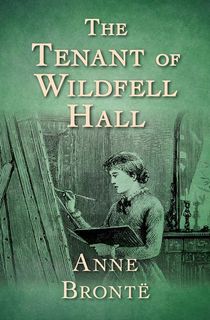
The Tenant of Wildfell Hall
Featured image: Wikimedia Commons


