
 About
About Deals
Deals Articles
 Genres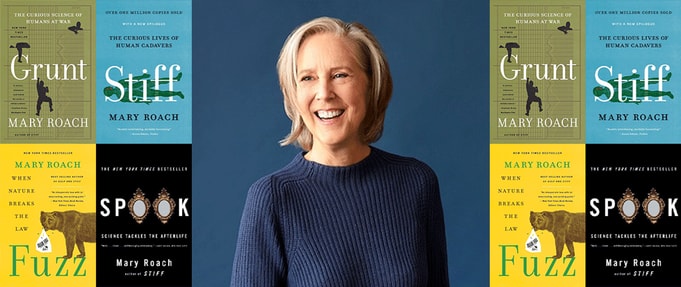

Mary Roach never planned to become a science writer. “To be honest,” she told The Verge, “it turned out that science stories were always, consistently, the most interesting stories I was assigned to cover. I didn’t plan it like this, and I don’t have a formal background in science, or any education in science journalism.”
Despite that, Roach has become a superstar of popular science writing. Her books are frequent habitués of the New York Times bestseller lists; she has been on countless best books of the year lists; she was the recipient of the Harvard Secular Society’s Rushdie Award, and her 2009 TED talk “Ten Things You Didn’t Know About Orgasm” is one of the most popular TED talks of all time.
Her many popular science books cover topics ranging from life in outer space to what happens to our bodies after we die.
Whether you’re a returning fan or someone new to Roach’s work, these 7 books will illuminate a new way of looking at the world around you—and probably make you laugh along the way.
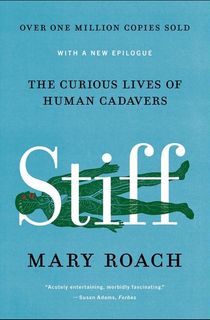
Stiff

Hailed as “gross, educational, and unexpectedly sidesplitting” by Entertainment Weekly, Mary Roach’s first book instantly made her into a star to watch in the field of popular science. It doesn’t hurt that she started by tackling such an “acutely entertaining, morbidly fascinating” topic (Forbes).
Stiff tracks what happens to our bodies after we die, and shows the roles—both obvious and unexpected—that human cadavers have played in scientific advancement through the years. When all is said and done, “You can close this book with an appreciation of the miracle that the human body really is” (Wall Street Journal).
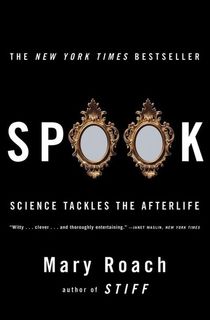
Spook
After exploring what happens to our bodies when we die, Mary Roach turned her attention to the possibility of life after death, becoming “a clever investigator and a thoroughly entertaining, if skeptical, tour guide” through the history of paranormal investigation (New York Times).
From science and pseudoscience to the work of quacks and con artists, “Reading Spook is like attending a lecture that is equal parts Groucho Marx and Stephen Jay Gould, both enlightening and entertaining” (Sunday Denver Post & Rocky Mountain News).
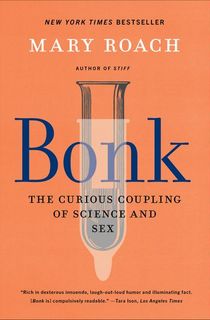
Bonk
“America’s funniest science writer” tackles one of the most taboo subjects: human sexuality, in this “wonderful read, sprinkled with facts you can quote to amaze your friends” (Washington Post; San Francisco Chronicle).
From the science of orgasms to the question of why Viagra doesn’t help women—or pandas—Roach takes readers on a globe-spanning tour “into human sexual life and practice, ranging from laboratories to brothels” (Chicago Tribune).
The result is “a light-hearted cabaret of a book by a writer who genuinely seems to be enjoying herself—in more ways than one” (New Scientist).
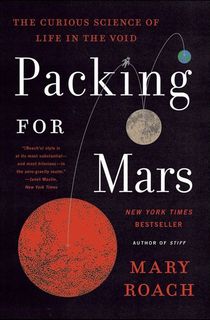
Packing for Mars
Among her various other accomplishments, Mary Roach serves on the Advisory Board of the Mars Institute.
So it should come as no surprise that she wrote this “hilarious” book that examines “the nitty-gritty details of life in space that filmmakers and historians tend to gloss over” (New York Times; Boston Globe).
Exploring everything from how astronauts go to the bathroom in zero gravity to a crash test of a new NASA space capsule, “Roach’s strange enthusiasm for all things oddball […] makes Mars more than a worthy destination” (Time).
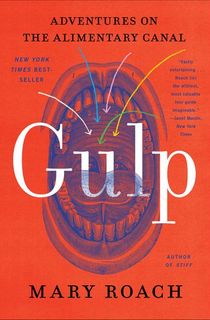
Gulp
Can even Mary Roach make digestion entertaining? That’s the question posed by Gulp, and it’s answered in “her funniest and most sparkling book,” a journey through the science of eating that’s “as engrossing as it is gross” (New York Times; Entertainment Weekly).
“A charming conversation starter,” readers travel from a lab where they taste-test pet food to the interior of a live stomach to watch the digestion process in action (People).
Roach shows why the Washington Post raved, “I can’t even think of another modern writer, or anyone from a previous era, who has so thoroughly—and so engagingly—written about the way scientists go about their work.”
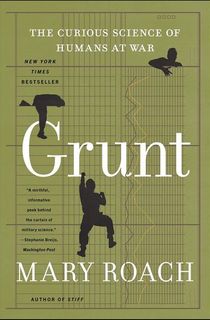
Grunt
War is something that gets talked about a lot. It’s a major part of global politics and is often both lionized and lamented in fiction and film.
One thing that gets relatively short shrift, however, is the science behind how troops stay safe, sane, and free from diseases and bugs amid some of the most challenging circumstances humans will ever face.
That’s where this “mirthful, informative peek behind the curtain of military science” comes in, as Mary Roach joins the U.S. Marine Corps Paintball Team, samples caffeinated meat, and stays up all night with the crew of the nuclear submarine USS Tennessee to write about the science behind the soldiers (Washington Post).
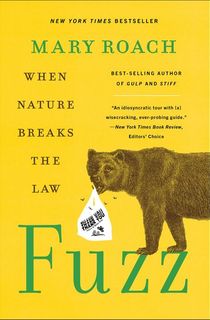
Fuzz
As you can see by now, Mary Roach is attracted to oddball scientific topics, and perhaps none are stranger than those covered in this instant New York Times bestseller, shortlisted for the Andrew Carnegie Medal for Excellence in Nonfiction.
What happens when an animal breaks the law? In the past, they might have been assigned legal representation and put on trial. Today, the answers are more likely to be found in the science of human-animal interaction, which Mary Roach explores in this “idiosyncratic tour with [a] wisecracking, ever-probing guide” (New York Times Book Review).
Visiting everything from vandal seagulls to “danger trees,” human-elephant conflict specialists to forensic investigators who specialize in animal attacks, “[Fuzz is] powerfully propelled by the force of Roach’s unflinching fascination with the weird, the gross and the downright improbable” (Washington Post).
Featured image: Jen Siska


