
 About
 Deals
 Articles
 Genres
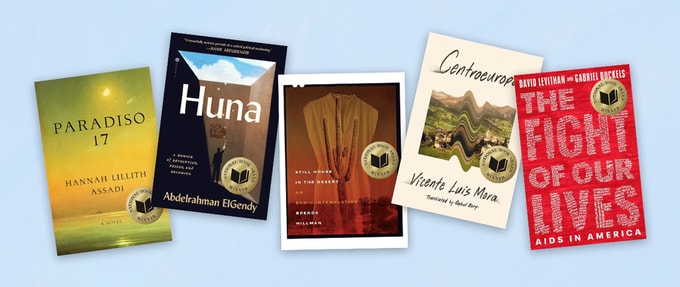

On November 18, at Cipriani Wall Street, the winners of the 77th National Book Awards were announced. Spanning a wide range of cultural, national, and ancestral backgrounds, many of this year’s prize-winning titles grappled with displacement, immigration, imprisonment, gender identity, and more.
The National Book Awards are among the most prestigious literary honors in the United States. Administered by the nonprofit National Book Foundation and established in 1950, they celebrate standout books across five categories: Fiction, Nonfiction, Poetry, Translated Literature, and Young People’s Literature.
David Steinberger, Chair of the Board of Directors of the National Book Foundation, thanked the judges for the work behind this year’s selections: “We are grateful to the 25 judges that collectively read nearly 2,000 books published this year in order to elevate our 2026 Finalists.”
The ceremony was hosted by Kyle MacLachlan, aka Special Agent Dale Cooper, with a special performance from musical guest Michelle Zauner of Japanese Breakfast. Salman Rushdie received the Medal for Distinguished Contribution to American Letters, and Perri Klass received the Literarian Award.
To learn more about the books that took home prizes, keep reading.
Fiction
Winner
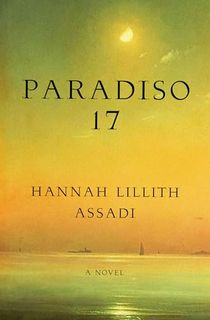
Paradiso 17
Sufien was born in Palestine, but was forced to leave his home during the 1948 Nakba. From there, he spent the rest of his life on the move, always onto the next thing.
In Kuwait, he meets his first love; in a small university town in Italy, he drinks wine and dreams of the West; and in New York, he discovers what he’s meant to do, falling for a Jewish woman from a different world.
Finally, he is called back, once more, to the desert in Arizona, and must reckon with what his search for home has left him with, in a “visionary, finely wrought portrait of rupture and endurance” (National Book Award Judges’ Citation).
Finalists
Dèy by Edwidge Danticat
Pretend You’re Dead and I Carry You by Julián Delgado Lopera
Beginning Middle End by Valeria Luiselli
Mad Eden by Morgan Thomas
Nonfiction
Winner
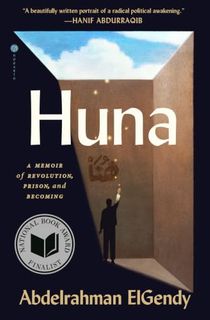
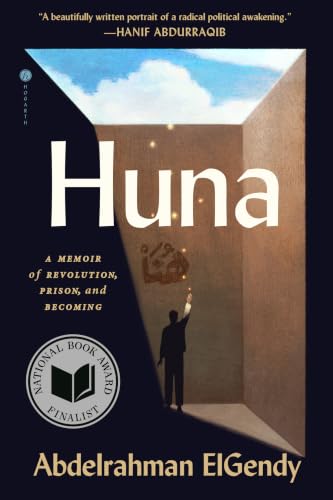
Huna
Two years after the January 25 revolution in Cairo, seventeen-year-old student Abdelrahman ElGendy was growing increasingly interested in activism. Hope for a free Egypt had passed, and with the summer’s military coup massacring protesters, Abdelrahman and his father took to the streets.
But within minutes, police arrived, shutting down the protests and arresting the father and son. Inside a cell, Abdelrahman first heard the Arab world’s most enduring protest song, “Sawfa Nabqa Huna”—We Will Remain Here. Over the next six years, they remained political prisoners, moving from jail cell to detention center, to The Scorpion, Egypt’s most infamous prison.
With seemingly no future beyond bars, Abdelrahman took to the page and earned his bachelor’s degree in engineering while incarcerated. Here, in his debut, Abdelrahman shares, “A phenomenal liberation story that resists all forces of authoritarian silencing and erasure with full-throated song” (National Book Award Judges’ Citation).
Finalists
The Midnight Special by Colin Asher
Let the Poets Govern by Camonghne Felix
Mother Tongue by Sara Nović
Spawning Season by Joseph Osmundson
Poetry
Winner
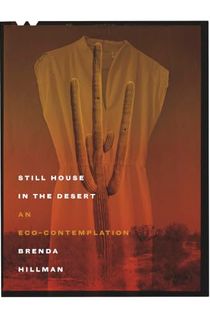
Still House in the Desert
Rounding out her previous collections about seasons, days, and minutes, Brenda Hillman concludes her quartet with “a rigorously unsentimental portrait of the stillness—both as silence and as continuance—of the poet’s childhood home after her mother’s death” (National Book Award Judges’ Citation).
Exploring rooms and objects, all imbued with imagination and opportunity, she reflects on the layers of her childhood and what she’s carried into adulthood.
Personal and reflective with Hillman’s characteristic spare lyrics, the poems expand from the awakening of mid-century environmental consciousness to a meditation on women’s domestic work.
Finalists
Tree of Knowledge by Victoria Chang
Hide by Carolina Ebeid
Exhibit G by Fady Joudah
Bramble by Susan Stewart
Translated Literature
Winner
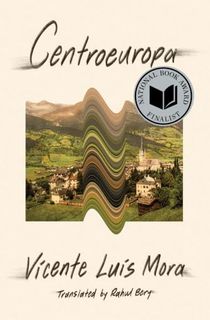
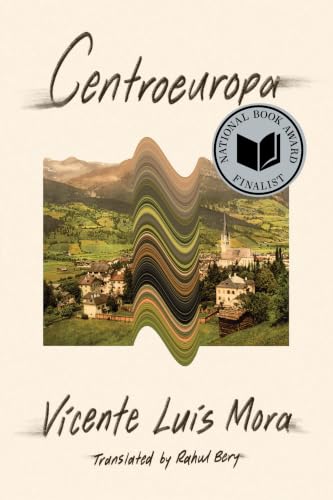
Centroeuropa
Translated from Spanish by Rahul Bery, Vicente Luis Mora’s Centroeuropa is set at the beginning of the nineteenth century, as European feudalism comes to an end. Redo Hauptshammer, recently widowed, arrives in a small town to begin his life as a farmer.
But as he works on his new field, he finds preserved, frozen corpses of soldiers from another time. The more he digs, the more bodies emerge.
He decides to call on his fellow villagers for help, risking exposure of a personal secret and the heartache at its center, in what becomes “a mysterious, intoxicating journey” (National Book Award Judges’ Citation).
Finalists
The School of Night by Karl Ove Knausgaard, translated by Martin Aitken
Night of a Thousand Hells by Intan Paramaditha, translated by Stephen J. Epstein and Tiffany Tsao
Pure Men by Mohamed Mbougar Sarr, translated by Lara Vergnaud
Your Presence Is a Danger to Your Life by Samar Yazbek, translated by Leri Price
Young People’s Literature
Winner
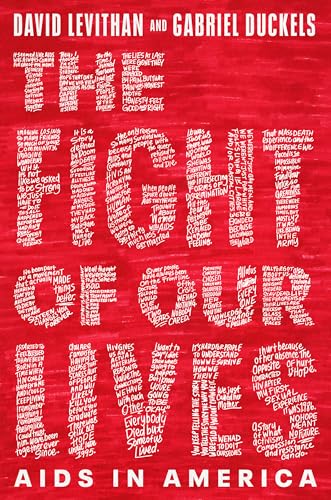
The Fight of Our Lives
With the AIDS crisis in America, LGBTQ+ and other marginalized groups came together, advocating for equality. There are countless individuals’ stories of those affected, surrounding grief, love, and advocacy.
Across timelines, essays, poems, and more, “David Levithan and Gabriel Duckels provide readers with the vital history of HIV/AIDS in the United States while exploring the urgency and depth of the epidemic with compassion and nuance,” showing young readers the power of activism (National Book Award Judges’ Citation).
Finalists
Holloway by Elana K. Arnold
When Tomorrow Burns by Tae Keller
That Which Feeds Us by Keala Kendall
Shook by Julian Randall


