
 About
 Deals
 Articles
 Genres
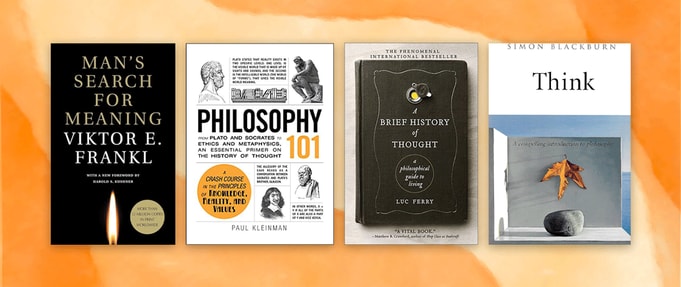

From our very first oral histories and throughout documented history, humanity has searched for a way to explain our existence and find meaning in life.
Who are we? How should we live? What is the universe made of? And what happens when we die? Ideologies, philosophies, and religions have sprung up trying to answer these questions.
For some, thinking about these questions has defined their entire lives. People like Socrates, Plato, Confucious, and others have entire schools of thought built around the questions they asked and the answers they offered.
So where should someone new start? Here are nine philosophy books perfect for beginners.

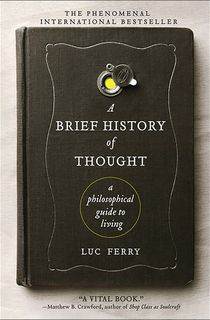
A Brief History of Thought

Philosophy has been around for as long humans have recorded history, and it was likely around even before that. So, where do you start?
Luc Ferry breaks down the history of philosophical thought from early Greeks and Christians through the Enlightenment and ending with postmodern thought.
It’s accessible and digestible for readers of all ages, and will help bring profound philosophical thinking into hectic, modern lives.
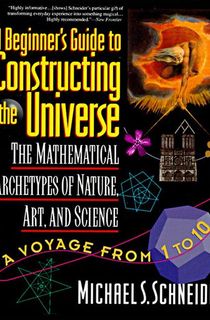
A Beginner's Guide to Constructing the Universe
Math is everywhere. It’s principles are in flowers, shells, crystals, plants, and the human body. We can find it in language, it’s present in folklore, sayings, fairy tales, myth, and religion. You can even find it in art and architecture.
Have you ever wondered why pizza, soda cans, or manhole covers are round? Or why ancient Greeks didn’t consider one and two numbers? Why the spiral is the most widespread shape in nature?
It’s all math. And Michael S. Schneider is going to walk you through all of that and more.
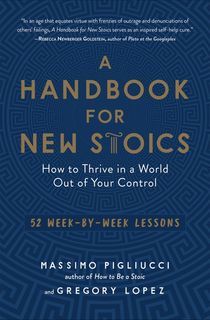
A Handbook for New Stoics: How to Thrive in a World Out of Your Control
So much of the things that cause us stress and unhappiness are largely out of our control. We can’t control how someone responds to us or if a meeting will start on time or if people will respond positively to a presentation we give.
But we can control how our response. Each week, Pigiucci and Lopez walk you through a lesson rooted in timeless Stoic teachings and help you apply it to your modern life.
By the end of the year, you’ll be better able to embrace challenges, thrive under pressure, and enjoy the good that life has to offer no matter what obstacles you face.
Think
Many of us know that there are big, life-altering questions out there; we just have no idea where to start.
Blackburn provides a simple framework rooted in basic philosophical principles that will help you tackle the kinds of big questions philosophers have been grappling with for centuries.
It’s a beginners guide to Western philosophy that is unintimidating and entirely approachable, making it perfect for anyone looking for a way to add more philosophical thought into their lives.
What Does It All Mean?
Thomas Nagel believes that the best way to understand philosophy is by thinking about the questions philosophers have thought about throughout time. In this book, he considers nine of those questions and presents some possible solutions to answering them.
These are his opinions, but by reading his thoughts, it opens the door for you to consider your own opinions, and maybe, you’ll reach out to others to broaden the discussion and examination.
And this, Nagel argues, is how we learn to think for ourselves and engage in philosophy in modern times.
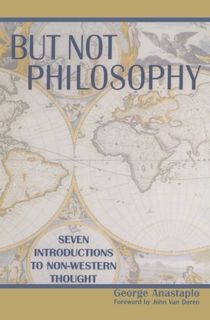
But Not Philosophy
While most philosophy books and classes focus on Western thought, there is a rich history of examination and thought throughout the non-Western world.
But Not Philosophy looks at seven of these major schools of thought introducing readers to non-Western Mesopotamia, ancient Africa, Hindu, Confucian, Buddhist, Islam, and North American Native beliefs.
Through ancient literary texts, legal codes, religious traditions, and other systems of thought, Anastaplo provides a rich and thorough history that adds a rich a thorough history to anyone looking to expand their philosophical knowledge.

Philosophy 101
Philosophy doesn’t have to be tedious. It shouldn’t be about memorizing and regurgitating the thoughts or ideas from history. Kleinman believes it should be engaging and interesting.
In Philosophy 101, he takes you through the history of philosophy using fascinating tidbits, illustrations, and puzzles, It’s a unique exploration that is as entertaining as it is informative.
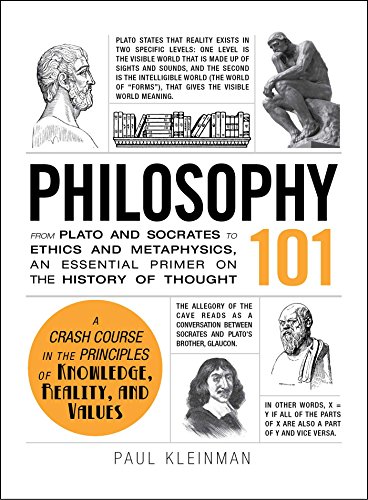
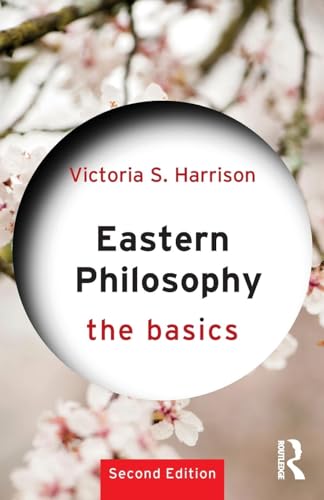
Eastern Philosophy
In Eastern Philosophy, Harrison covers the history and present method of thinking through various schools of Eastern thought. She covers Confucianism, Daoism, Buddhism, and Hinduism.
She also examines the relationship between Eastern philosophy and Western philosophy, and how each handles the questions we’ve been asking since the dawn of humanity.
Covering timelines, key figures, and important contributions, you’ll walk away with a firmer understanding of Eastern philosophy and how you can apply these perspectives to your modern life.
Man's Search for Meaning
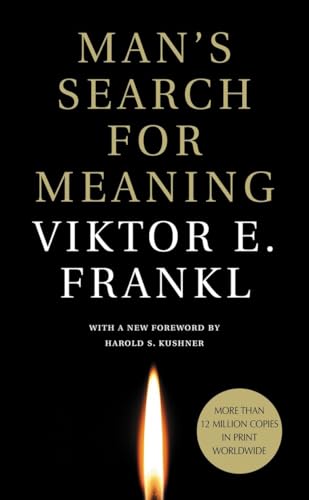
For centuries, philosophers have wrestled with how we can find meaning in our lives. But some of the most profound lessons have come from the people who were forced to find that meaning under terrible circumstances.
As Frankl describes life in the Nazi death camps, and the struggles of his patients afterwards, he introduces readers to the idea of logotherapy. Through his experiences, he believes the basic human drive isn’t pursuing pleasure.
Instead, we are most spiritually at peace when we strive for meaning in our lives. And he believes we can find significance surrounding us daily if only we look.
Featured image: Canva


