
 About
About Deals
Deals Articles
 Genres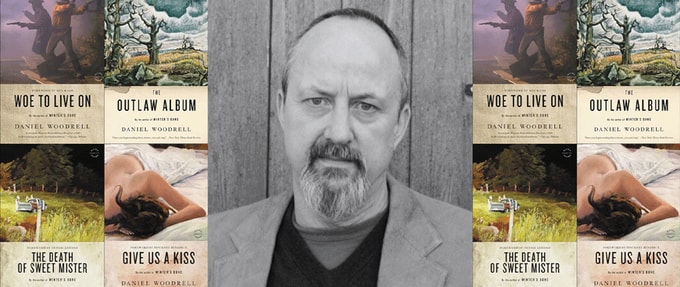

Known for penning numerous award-winning novels in the country noir genre, Daniel Woodrell died on Friday at his home in West Plains, Missouri. According to his wife, Katie Estill-Woodrell, the cause was pancreatic cancer. He was 72.
Woodrell routinely set his novels in the rugged, abundant Missouri Ozarks, a place that became familiar to him in childhood. The author was best known for his novel Winter’s Bone, which follows a young girl as she struggles to navigate family secrets and keep herself afloat amid immense poverty.
Among numerous achievements, the novel was adapted by writer-director Debra Granik into a film of the same name, which became Jennifer Lawerene’s breakout role and won two awards at the Sundance Film Festival and received four Academy Award nominations.
Woodrell first coined the term “country noir” to describe his 1996 novel, Give Us a Kiss. Yet, William Michael Boyle, a fellow author of crime fiction, put his style and talent into a larger context:
"This Woodrell guy's got double of everything. Language, plot, dialogue, sense of place, energy, tension [...] He's interested in the whole of humanity through the lens of his place."
Woodrell’s second novel, Woe to Live On, was adapted into the 1999 film Ride with the Devil, directed by Ang Lee and starring Tobey Maguire. Set largely in Kansas and Missouri, the story follows the young narrator, Jake Roedel, as a member of the First Kansas Irregulars during the Civil War.
Additionally, his follow-up to Give Us a Kiss, Tomato Red, which follows a wanderer pulled into a life of crime with a pair of teenage siblings, was also adapted into a film in 2017, starring Julia Garner.
Born in Springfield, Missouri, Woodrell dropped out of high school and joined the Marines at 17, before later finding his love for writing and earning a degree in English from the University of Kansas. Later, while working towards his master’s degree from the prestigious Iowa Writers’ Workshop, he met Estill, a fellow student, whom he married in 1984.
Although the couple moved around the Midwest, they eventually settled in West Plains in the mid-1990s, with Woodrell telling Esquire, “I came back when I’d had a taste of other places and realized that I would never feel the same sense of connection to any place other than the Ozarks.”
Let's take a look through Woodrell's catalog as we celebrate his life and artistic accomplishments.
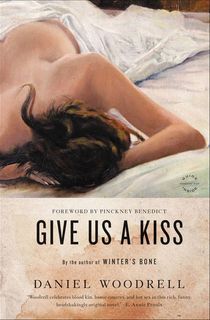
Give Us a Kiss
Doyle Redmon, a wannabe writer, has officially moved from the place of his imagination into real life, on the run and heading to his home in the Ozarks. There, he’s supposed to find his brother, Smoke, who's on a felony warrant, and convince him to turn himself in to the police.
But Smoke is hiding away with his partner, Big Annie, and their daughter, with bigger fish to fry: the homegrown marijuana they’re harvesting.
With nothing better to do, Doyle decides he wants in on the scheme, knowing that means dealing with something worse than the law—the Dollys. A legendary crime family, they have been feuding with the Redmonds since Doyle could remember.
Now, they must find a way to make a buck, that is, if they can evade death, in a story that proves “Woodrell knows deeply the subjects he writes on” (Washington Post).
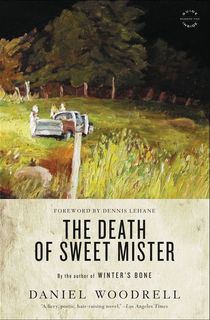
The Death of Sweet Mister
In “a terrifying journey into the heart of darkness,” The Death of Sweet Mister follows a lonely boy named Shug Akins, whose life as he knows it is about to be shattered. His only friend, his mother, Glenda, tries to give him hope for the future, against the brutality of his father, who repeatedly mocks the boy.
Set in a small town in the Ozarks, Jimmy Vin Pearce comes waltzing in with his shiny car and city clothes, ready to shake things up. When he begins an affair with Glinda, a series of violent consequences ensue, “peel[ing] back the layers from lives already made bare by poverty and petty crime” (Otto Penzler, Penzler Pick, 2001).
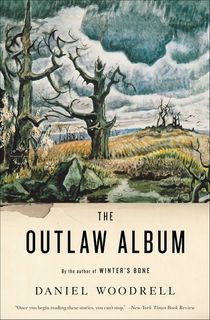
The Outlaw Album
In this collection of short stories from the crime fiction master, “Woodrell writes about violence and dark deeds [...] in compact, musical prose” (New York Times). Across the board, desperation motivates his characters, whether a husband is seeking revenge for his murdered wife’s pet or a young girl is taking care of an injured rapist.
As always, “Woodrell has a master's ability to create tension,” and despite routinely drawing attention to a troubled darkness beneath the surface, he returns to the vulnerability at the heart of each vivid character (New Yorker).
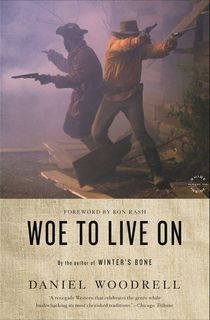
Woe to Live On
Set in Kansas and Missouri, the young recruit Jake Roedel witnesses the rampant violence along the American frontier. With his fellow First Kansas Irregulars, no one is safe, and he must routinely fight for his life.
In the desert, Roedel grows up fast, with no standards or even a sense of mercy. As put by St. Louis Post-Dispatch, “Woe to Live On speaks to the universal cruelty of civil war,” where, no matter loyalty, friends can become enemies.
Featured image: Hachette Book Group


