
 About
About Deals
Deals Articles
 Genres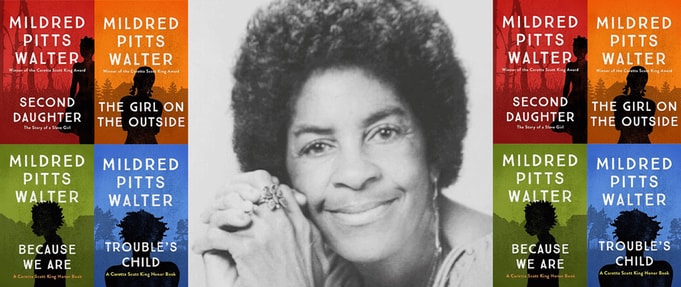

Born on Sept. 9, 1922, in Sweetville, Louisiana, Mildred Pitts Walter became familiar with the pain of segregation early—having to buy shoes that didn’t fit because white clerks wouldn’t let Black children try them on. There was only one library in town, and it was off-limits to her. Even when she did get her hands on a book, it rarely offered any familiar representation.
Walter had a mind to change that. In 1940, after she finished high school, she enrolled at Southern University in Baton Rouge, earning a Bachelor’s in English. From there, she earned her teaching certificate from California State University, Los Angeles, and taught kindergarten. Throughout the 1950s and ’60s, she educated children across South Central—children who were Black, like her.
Under President Lyndon B. Johnson, the federal government had begun setting aside funds to create that kind of representation. Knowing this, Walter reached out to a local publishing company, Ward Ritchie Press, hoping they’d take it on. What she didn’t expect was for the executive to respond, “Well, write them.”
For the next three decades, she wrote over 20 books—work that Lin Oliver, a founder of the Society of Children’s Book Writers and Illustrators, which Walter also helped found, described in a tribute as having “changed the course of children’s literature.”
Her first book, Lillie of Watts, was published in 1969 and followed a young girl searching for her lost cat in the Watts neighborhood four years after the riots there. Her 1986 book, Justin and the Best Biscuits in the World, won the Coretta Scott King Award, following a boy named Justin who goes to stay at his grandfather’s ranch and learns to break away from strict gender roles. In 1996, she received the Jane Addams Children’s Book Award Honors for Second Daughter, based on the true story of Mum Bett (Elizabeth Freeman), an enslaved woman in Massachusetts who sued for her freedom.
In 1947, she married Earl Walter, who would become chairman of the Los Angeles chapter of the Congress of Racial Equality, otherwise known as CORE. He died in 1965. Walter is survived by her son, Craig; a grandson; a granddaughter; and four great-grandchildren. Her grandson, Nizam Walter, confirmed her death at an assisted-living facility on May 19 in Redwood City, California, where she was 103.
Walter’s life’s purpose, of creating representation in stories and in the world beyond, although successful, will never really be finished. Her legacy remains as vital now as it was when she first sat down to write.
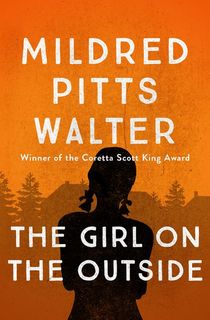
The Girl on the Outside
Based largely on the 1957 Little Rock school integration, two teenage girls—one white, one black—become involved in the differing views of fear and prejudice across their southern town.
Sophia Stuart is a senior at Chatham High, where she, one of the prettiest and most popular girls in school, will be sharing class with nine Black students. But her family all have differing views on the matter.
Fifteen-year-old Eva Collins has grown used to riding in the back of the bus and attending a segregated church. One of her lifelong dreams is about to come true: going to Mossville’s first desegregated school.
When a delay is put in place and the National Guard comes to town, these two girls’ lives will be transformed forever.
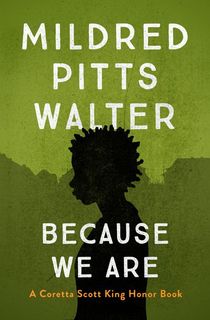
Because We Are

It’s Emma Walsh’s final year at Marlborough High School, where she’s one of only a few African American students in attendance.
She’s on the student council, has recently been elected to the National Honor Society, and her next steps toward becoming a doctor have never been so close. Until an outburst at the annual debutante ball leads her to be transferred to the all-Black Manning High School.
There, she’s afraid she won’t fit in among children less fortunate than herself, and wonders if she can still attain the success she’s spent a lifetime working towards.
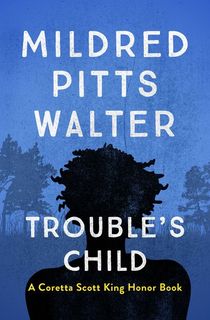
Trouble's Child
Blue Isle is a place of superstition—but fourteen-year-old Martha won’t have any of it. She was raised on the island, and everyone expects her to stay, following in the footsteps of her midwife grandmother Titay.
When a young man, Hal Saunders, washes up on the shore, Martha and Titay take him in—to the chagrin of the other islanders, who believe he brings with him illness.
From Hal, who’s saving up to go to marine biology school, Martha’s eyes are opened to a whole new way of living—of a life where she makes her own path.
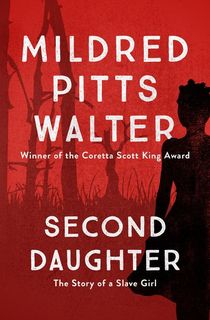
Second Daughter
Set during the American Revolution and based on a true story, six-year-old Aissa and her older sister, Elizabeth, are enslaved by their owners, Master and Mistress Anna, in Sheffield, Massachusetts.
Aissa longs to be freed, while Elizabeth, known as Bett, has grown used to her bondage. When she marries Josiah Freeman, a freed black man, and they have a child together, Bett becomes involved with the growing anti-slavery sentiment.
Tensions come to a head during a violent outburst, and Bett’s does the previously unthinkable by taking her owners to court.

Featured image: Wikimedia Commons


