
 About
About Deals
Deals Articles
 Genres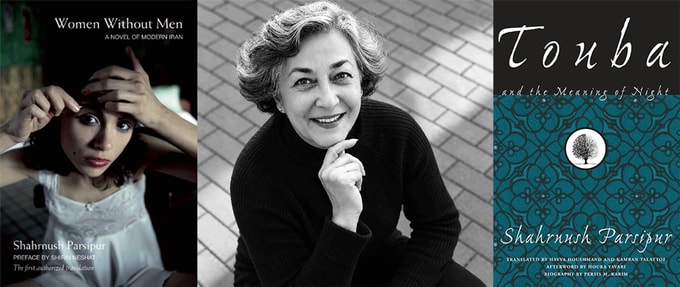

Shahrnush Parsipur was no stranger to speaking out for what she believed. In fact, her literary career, beginning at age 16 and through her first published book in 1969, was defined by defiant, subversive literature that led to multiple imprisonments.
Credited as the first modern Iranian female novelist, Parsipur passed on July 3 in San Francisco. She is survived by her son, artist Ali Taghavi, who shared that she died of a stroke, and her two siblings.
Frequently targeting both the Shah’s regime and the Islamic Republic, Parsipur wrote about Iran’s patriarchal culture, most famously in Women Without Men. Longlisted in 2026 for the International Booker Prize, though it was first published in 1989, the story follows five women from different backgrounds who arrive at a garden on the fringes of Tehran.
Grappling with expectations of family and society, the women imagine a future without men, in what the International Booker Prize judges described as “a world that is simultaneously scoured by reality, and touched with fable and myth.”
All of Sharnush Parsipur’s books have been banned in Iran for over three decades, notably for their frank portrayals of female sexuality. While trying to keep Women Without Men in print, Parsipur was jailed twice. However, the book would become a sensation in Iran’s literary underground and was eventually translated into multiple languages as well as adapted into a feature film in 2009.
Shahrnush Parsipur was born in 1946 in Khorramshahr, a city in western Iran. She went on to study sociology at the University of Tehran, and, by that time, was often published in literary journals. In 1973, she took on a role as an Iranian state broadcaster, but would soon after quit in protest, after the execution of two prominent writers and imprisonment of four others by the government.
She was then arrested for opposing the government, and wrote her first novel, The Dog and the Long Winter, in 1974, drawing on her experience. In 1981, she was arrested again, for four and a half years, and began a new novel, Touba and the Meaning of the Night, following a woman in 20th-century Iran.
After spending several months in the United States and Europe, lecturing, Parispur ultimately decided to make California her home, where she spent the remainder of her life and had more freedom to publish.
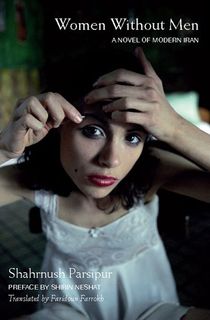
Women Without Men

Following the interconnected destinies of five women, including a wealthy housewife, a prostitute, and a school teacher, as they come to live together on the fringes of Tehra, this is a powerful tale of female freedom.
Shahrnush Parsipur’s most celebrated work, it demonstrates her literary prowess as “a courageous, talented women, and above all, a great writer” (Marjane Satrapi, author of Persepolis).
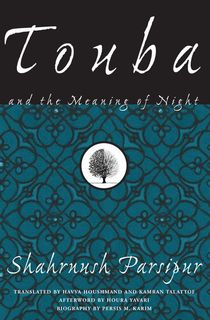
Touba and the Meaning of Night
A “mystical and emotional odyssey spanning eight decades of Iranian cultural, political, and religious history,” Touba and the Meaning of Night follows a young girl named Touba, grappling with modernity, in a place of tradition (Booklist).
Detailing her two marriages—one for financial security, the other for passion—Touba routinely does away with expectation, serving as the matriarch to an ever-evolving household.
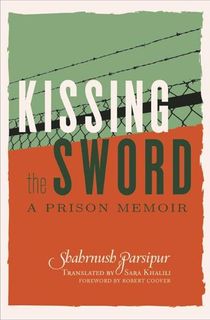
Kissing the Sword
When the Revolution began in 1979, citizens immediately found themselves imprisoned for their beliefs—one such person was Parsipur.
Kissing the Sword recounts her time as a political prisoner, bearing witness to fundamentalist power, and “stands as a powerful testament to not only the devastations of an era, but to the integrity and courage of an extraordinary woman” (Kirkus Reviews).
Featured image: Feminist Press


