
 About
About Deals
Deals Articles
 Genres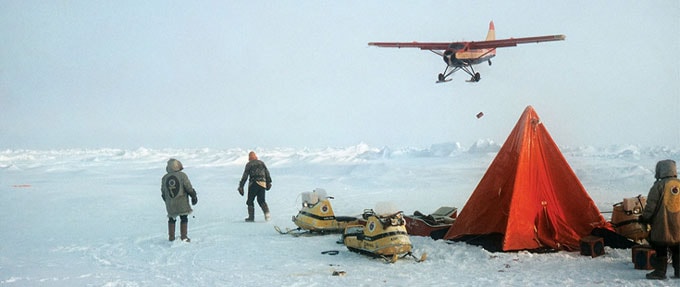

For centuries, the Arctic has captivated explorers, adventurers, and scientists with the promise of reaching the “top of the world.” Their determination led to some of the most extraordinary journeys in history, from grueling dogsled expeditions across shifting sea ice to daring attempts to reach the North Pole by ship, foot, and airship.
The Arctic’s dangers were immeasurable: temperatures could plunge far below zero, ice could crush ships unexpectedly, and many explorers never returned home.
Yet the Arctic was never the empty wilderness some explorers imagined. Unlike Antarctica, which is a continent covered almost entirely by ice, the Arctic is a vast region of ocean, land, and permafrost, home for centuries to Inuit communities who developed sophisticated ways to travel, hunt, and survive in its extreme conditions. European explorers increasingly ventured north in search of the Northwest Passage, hoping to find a shortcut between the Atlantic and Pacific Oceans to win fame, fortune, and new territory.
Included are biographies of explorers who changed our understanding of the North through their fight for survival, and two historical novels inspired by real Arctic disasters and expeditions.
Today, the Arctic remains one of the most remote and rapidly changing places on Earth, continuing to inspire adventure even through it's freezing temperatures.
The stories collected here reveal the many faces of Arctic exploration. Some follow explorers who risked everything to reach the Pole, while others examine the families and communities they came across in their expeditions.
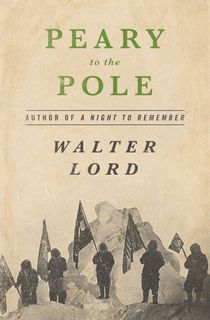
Peary to the Pole
Peary to the Pole recounts explorer Robert E. Peary’s quest to reach the North Pole. On March 1, 1909, just 413 miles of formidable ice stood between Peary and the goal he had pursued for decades.
After six attempts and 22 years of effort, he and his party faced shifting sea ice, sledges smashed by rough terrain, men and dogs plunging into the Arctic Ocean, and temperatures of 50 degrees below zero.
Lord captures the dangers and suspense of Peary’s final expedition, as well as the bitter controversy that followed when Dr. Frederick A. Cook claimed he had reached the Pole first.
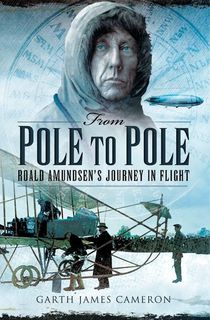
From Pole to Pole
Roald Amundsen was the most successful polar explorer of his era, and one of the first to see aviation as the key to reaching the world’s remaining unexplored frontiers. He was the first person to reach the South Pole, on December 14, 1911, and later became the first to reach the North Pole by air, aboard the airship Norge in 1926.
In From Pole to Pole, Garth James Cameron explores Amundsen’s lifelong fascination with aviation, from his early experiments with man-lifting kites to his pioneering aerial expeditions.
The biography also examines the final chapter of Amundsen’s life, when he disappeared during a 1928 search-and-rescue flight for the missing airship Italia, a mystery that continues to fascinate polar historians.
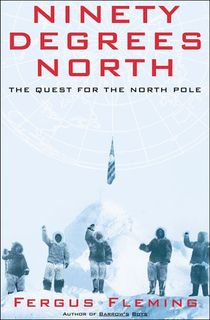
Ninety Degrees North
In the nineteenth century, the North Pole was a place of mystery and speculation. Was it an open sea, a gateway to unknown worlds, or simply a wilderness of ice? In Ninety Degrees North, Fergus Fleming chronicles the extraordinary race to find out, beginning with the disappearance of Sir John Franklin in 1845 and the expeditions that followed.
As interest in the North grew, explorers from around the world set out to answer these questions, from government-backed expeditions to eccentric adventurers such as Swedish balloonists and Italian aristocrats.
Drawing on unpublished archives and long-forgotten journals, Fleming recounts how these explorers battled shipwreck, starvation, and sickness in their quest to reach the top of the world, often achieving fame despite their failures.
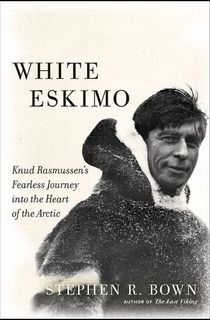
White Eskimo
Part Danish and part Inuit, Knud Rasmussen was one of the most remarkable Arctic explorers of the early twentieth century. Born and raised in Greenland, Rasmussen learned to shoot and harness sled dogs as a child, skills that later helped him undertake extraordinary journeys across the Arctic.
In White Eskimo, Stephen R. Bown tells the story of Rasmussen’s three-year journey by dog sled from Greenland to Alaska, where he studied the shared history and traditions of Arctic communities.
His research into Inuit spirituality and culture earned him the title “Father of Eskimology.” Unlike many explorers of his era, Rasmussen traveled with only a few Inuit assistants and lived off the land, relying on the skills he learned growing up.
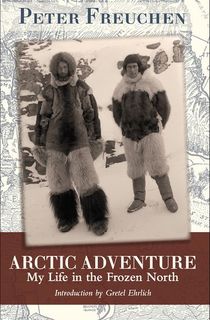
Arctic Adventure

In 1910, polar explorer Peter Freuchen and his friend, the famed Arctic explorer Knud Rasmussen, founded a settlement and trading post at Thule, Greenland, just 800 miles from the North Pole.
In Arctic Adventure, Freuchen recounts the fifteen years he spent living among the Inuit, adopting their ways of life, marrying an Inuit woman, and raising two children. His expeditions took him through some of the Arctic’s most dangerous conditions, where he survived frostbite, snow blindness, and starvation.
Freuchen also writes about polar bear hunts, encounters with people driven to cannibalism by famine, and the experience of seeing the sun again after three months of winter darkness. A trained journalist and gifted storyteller, Freuchen brings warmth, wit, and deep respect to this memoir of life in the frozen North.
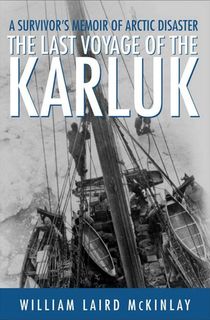
The Last Voyage of the Karluk
In 1913, William Laird McKinlay joined explorer Vilhjalmur Stefansson’s Arctic expedition aboard the Karluk, a ship ill-equipped for the treacherous waters north of Alaska. When the vessel was crushed by ice, Stefansson abandoned his crew, leaving them to face an extraordinary struggle for survival. In The Last Voyage of the Karluk, McKinlay recounts the nightmare that followed, drawing on the daily log he kept throughout the ordeal.
Inexperienced and without a day of Arctic survival training, McKinlay and his fellow crewmen endured 12 months of subzero temperatures, 80-mph winds, few remaining supplies, and almost no hope of rescue.
His firsthand account remains a remarkable testament to the human will to survive.
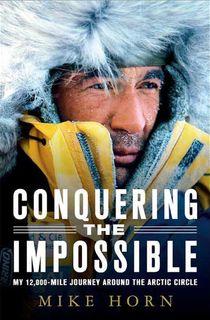
Conquering the Impossible
In August 2002, explorer Mike Horn embarked on a 27-month journey around the Arctic Circle, traveling 12,000 miles by sail and on foot without motorized transportation.
In Conquering the Impossible, Horn recounts the challenges he faced, from temperatures as low as 95 degrees below zero to unstable ice that plunged him into freezing waters.
He encountered polar bears so close he could feel their breath and survived a fire that destroyed his equipment and nearly cost him his life. Alongside these harrowing experiences, Horn shares amusing and inspiring encounters with people living in the world’s most remote places.
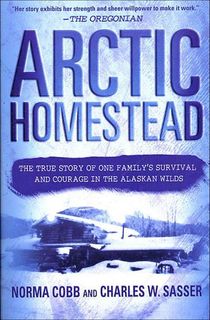
Arctic Homestead
In 1973, Norma Cobb, her husband Lester, and their five young children left the continental United States for Alaska, determined to claim land under the Homestead Act and pursue a pioneer dream. The only land available to them was near the Arctic Circle, north of Fairbanks, where grizzlies outnumbered humans twenty to one.
In Arctic Homestead, Cobb recounts the dangers that awaited her family, from fierce winters and predatory animals to dangerous neighbors who threatened to rob, burn out, and shoot new settlers.
Their first cabin collapsed under the weight of snow, while spring floods and prowling bears brought new dangers. Through it all, Cobb’s courage and determination kept her family alive.
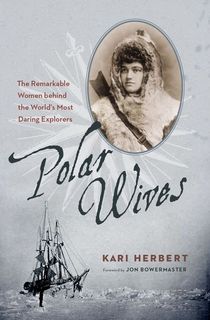
Polar Wives
The heroic age of polar exploration is often told through the men who ventured into the Arctic and Antarctic, but Polar Wives brings the women behind those famous expeditions into focus. As the daughter of a polar explorer, Kari Herbert offers an intimate portrait of seven remarkable women, including Kathleen Scott, Jane Franklin, Jo Peary, Emily Shackleton, Eva Nansen, and Herbert’s own mother, Marie Herbert.
Drawing on previously unpublished journals and letters, Herbert reveals their lives of adventure, longing, betrayal, and hope, from the Arctic and Antarctic to war-torn Macedonia and the lawless Australian outback.
These women were far more than historical footnotes, playing vital roles in their husbands’ expeditions while living extraordinary lives of their own.
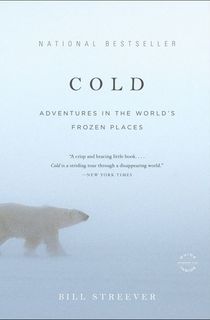
Cold
In Cold, scientist Bill Streever spends a year exploring the world’s frozen places, from the Alaskan Arctic to the glaciers of Antarctica and the landscapes of ancient ice ages. Along the way, he takes a dip in a 35-degree Arctic swimming hole, investigates how animals survive extreme temperatures, and revisits the legendary expeditions of explorers such as Ernest Shackleton.
Streever also explores the science and history preserved in glaciers, from woolly mammoths to ancient human settlements, while considering the limits of cold itself and the theory of absolute zero. Part scientific exploration and part adventure, Cold offers a fascinating journey into the frozen world.
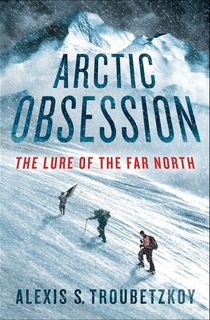
Arctic Obsession
In Arctic Obsession, Alexis S. Troubetzkoy chronicles the history of northern exploration, from early searches for the Northwest and Northeast Passages to the expeditions that claimed lives and reshaped the region. The book asks what has made the Arctic so alluring and examines the men who ventured into its unpredictable wilderness, many of which never returned home.
Troubetzkoy also looks at the Arctic’s place in the modern world, exploring the environmental, ecological, and geopolitical concerns transforming the region today, from Canada and Alaska to Russia, Greenland, Iceland, and the North Sea.

Afterlands
Nineteen men, women, and children set out aboard the USS Polaris in 1871, only to become stranded on an ice floe off the coast of Greenland for six harrowing months. Among them were people from the United States, Germany, Denmark, England, Sweden, and Greenland, including two Inuit families.
Based on this ill-fated expedition, Steven Heighton’s Afterlands imagines the lives of those who struggled to survive the experience. Drawing on the writings of actual expedition member
George Tyson, Heighton blends history and fiction to explore the physical dangers of the frozen landscape alongside the fear, hunger, rivalry, and love that shaped the survivors’ struggle to stay alive.
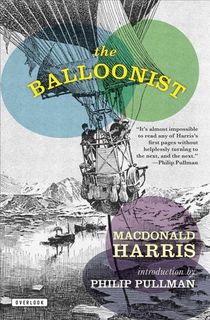
The Balloonist
In July 1897, Swedish inventor Gustav Crispin sets out to become the first person to reach the North Pole by hot-air balloon. Accompanied by an American journalist and a young French-speaking adventurer, Crispin climbs into a small wicker gondola and cuts the ropes, beginning a perilous journey into the Arctic.
As violent winds batter their fragile balloon, Crispin’s thoughts repeatedly return to his romantic obsession, Luisa, creating an unexpected contrast between his ambitious expedition and the life he left behind.
In The Balloonist, MacDonald Harris blends Arctic adventure with romance and philosophical reflection in a novel that was nominated for the National Book Award.
Feature Image: 1968 Plaisted Polar Expedition


