
 About
About Deals
Deals Articles
 Genres

Atomic Habits took the self-help world by storm, offering a straightforward path towards true transformation. The #1 New York Times-bestselling author James Clear ultimately argues that goals can become achievable when prioritizing small, incremental change.
Building, never mind sticking to, habits is a process. But over time, through repetition and commitment, these adjustments become behavior. What makes Clear’s strategy possible is its simplicity, providing an actionable system that enables consistency.
If you’re looking for books with the same science-backed, grounded flavor to kickstart your self-improvement journey, you’ve come to the right place. These seven books are the ultimate guide to taking control of your life through your habits.
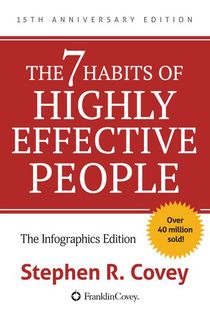
The 7 Habits of Highly Effective People
A New York Times and Wall Street Journal bestselling guide, The 7 Habits of Highly Effective People, teaches readers how preconceptions can hinder relationship development in both business and personal life.
Building community is crucial to success, which begins with doing away with a me-first attitude. Highly respected motivator Stephen R. Covey ultimately shows readers how to see life as a journey of cooperative creativity, in which uplifting others is the key to meaningful change.
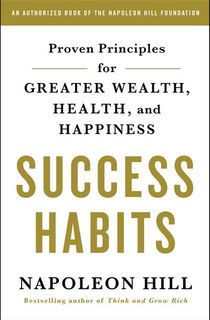
Success Habits
Seizing control of your life is a process—one that requires steps to reach fulfillment.
Offering “advice [that] is eminently practical and solid,” self-help guru Napoleon Hill outlines measures such as having a Definiteness of Purpose and an influence over the Cosmic Habit Force, to set intentions and goals.
Beginning as a series of radio talks, Success Habits is told in Hill’s characteristic easy-going style, with many personal stories. Use this guide as a way and means to a more fulfilled, successful version of yourself.
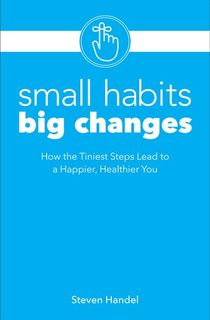
Small Habits, Big Changes
Beginning as intentional actions, habits become ingrained over time. There is not an aspect of your life that is not touched by them, which is why it’s crucial to examine what habits serve you, versus those that are unconscious, or perhaps even negative.
Take control of your habits with Small Habits, Big Changes. Whether you’re looking to break the cycle or promote relaxation, Steve Handel will show you how even tiny adjustments in your life can create significant change.
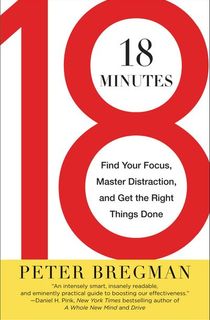
18 Minutes
“An intensely smart, insanely readable, and eminently practical guide to boosting our effectiveness,” 18 Minutes shows readers how to navigate the noise and instead prioritize what is important (Daniel H. Pink, New York Times-bestselling author).
Based on his weekly Harvard Business Review columns, Peter Bregman offers his approach in short, approachable chapters. Mixed with personal experience and case studies, he offers pathways towards a more balanced life.
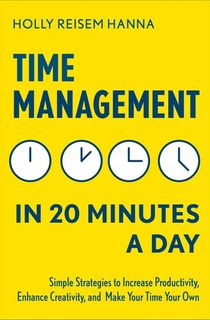
Time Management in 20 Minutes a Day
The last thing you want to do while learning to manage your time is take up a lot of time! That’s where Holly Reisem Hanna and her accessible lessons come in.
Every day, whether it’s a disorganized schedule or an unplanned meeting, you’re being pulled in many directions—even though some of them could be avoided.
Learn how to take charge of your calendar, with practical advice on time management, work-life balance, and implementing tech.
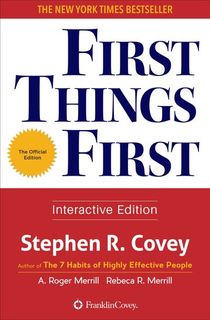
First Things First
Touted as the gold standard for time management books, First Things First is all about centering principles that are not only attainable but also aligned with your ambitions.
Tried and true, Stephen R. Covey delivers “goals [that] embody a perfect balance of the mental, the physical, the spiritual, and the social” (Booklist).
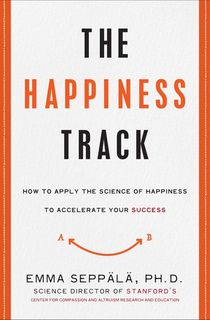
The Happiness Track
In today’s culture, we’re taught to make a choice between happiness and success. Emma Seppälä, the Science Director of Stanford’s Center for Compassion and Altruism Research, shows that it is not the case.
In fact, it is these outdated theories that push us towards burnout. Instead, drawing on scientific research on happiness, resilience, willpower, mindfulness, and more, Seppälä proves that happiness is, in fact, productive.
Featured image: Mhatzapa / Canva


