
 About
 Deals
 Articles
 Genres
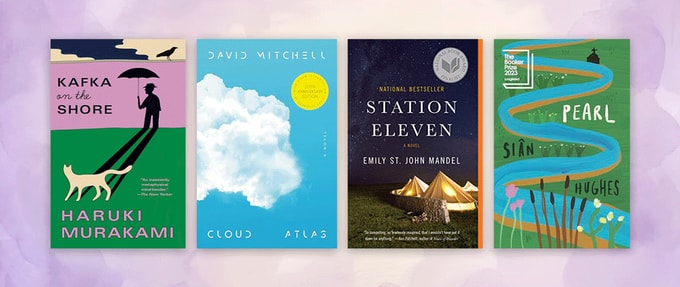

When deciding what to read next, genre often helps us narrow our choices. Like, if you’re in the mood for magic and wizards, you may pick fantasy. Or if you’re ready for some jump scares, you’ll opt for horror. And if you prefer stories set in the real world with a lot of character interiority, you’ll probably go with literary fiction.
But at the end of the day, genre labels are defined and debated by scholars and those running a book’s marketing campaign. And more often than not, truly great fiction resists categorization. Lately, more and more writers are blurring the boundaries, mixing elements from various genres to tell engaging and entertaining stories.
While some books are pretty easy to label, other narratives simply refuse to play by the usual rules of genre. So, if you’re looking for memorably unsettling books that simply transcend genre boundaries, check out our curated selections below!
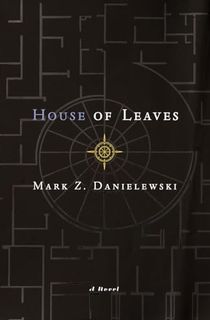
House of Leaves
Published at the turn of the century, House of Leaves turns postmodernist metafiction on its head. Extremely experimental, the book is a story within a story, about a haunted house that’s ostensibly bigger on the inside, and what happens to the family that inhabits it.
But it’s also about the person writing the footnotes and his gradual descent into delirium. And it’s also a satire on the conventions of academia, and it gets pretty poignant and poetic at times.
At times, it feels like a giant puzzle for the reader to solve. In short, House of Leaves defies neat categorizations and easy interpretations, and it’s a stunning read.
If you have a soft spot for epistolary and/or ergodic fiction, you’ll be pretty much mesmerized by this one.
Station Eleven
Elegant and elegiac, Station Eleven is an enchanting novel that explores how a group of people struggle to survive and find meaning after a pandemic devastated much of human civilization.
Some turn to theater. Some join a religious cult. Some hold onto fragments of a comic book and strive to fill in the blanks.
But is this a sci-fi novel? A dystopian book? A pandemic story? Or a prime example of literary fiction?
Some have even called it “theater fiction”. However one wishes to label it, one can’t deny that Station Eleven is a rather arresting and moving piece of work, imbued with a quiet magic.

Pearl
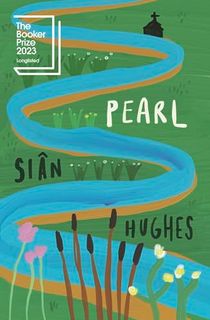
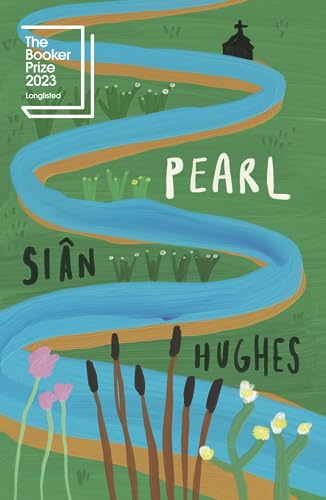
Inspired by the medieval poem of the same name, Pearl delves into the narrator’s inner world: her mother went missing when she was still a child, and she is about to become a mother herself.
Longlisted for the Booker Prize, Pearl is a beautiful, haunting novel about grief, family, and motherhood. The prose is lush and atmospheric, and full of Gothic and supernatural undertones.
But is this a Gothic novel, a ghost story, or a literary coming-of-age tale? Pearl blurs genre boundaries and conventions, weaving an intensely emotional story that will keep you gripped and make you cry.
If you prefer short reads, don’t skip this one.
Cloud Atlas
We’ve talked about books blurring genres. But what about books that blur writing styles and span different time periods and geographical locations?
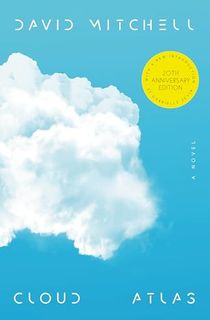
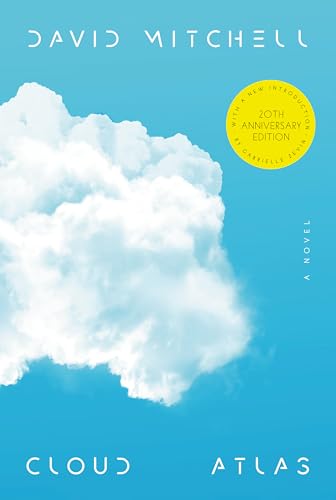
Cloud Atlas by David Mitchell is a gorgeous work of art that unfolds as six interconnected, nested stories, and it was a huge hit with readers of both literary fiction and speculative fiction.
It was actually inspired in part by Italo Calvino’s If on a Winter’s Night a Traveler and pushes the boundaries of genre and storytelling in innovative ways.
Utterly engrossing and entertaining, Cloud Atlas is a page-turner that will stay with you long after you’ve finished it and will definitely encourage you to check out other works by the same writer.
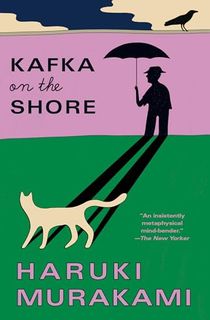
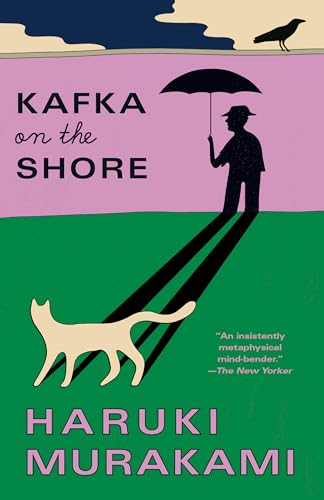
Kafka on the Shore
One of the most famous contemporary Japanese writers, Haruki Murakami is known for using elements of magic realism and mystery to pen truly spellbinding, philosophical works.
There’s always an element of strangeness and the surreal in his stories, but in Kafka on the Shore he pushes it up a notch, weaving music, metaphysics, and dream symbolism into a captivating narrative that’s both puzzling and thought-provoking.
While the different storylines are engrossing and easy to follow, understanding the narrative as a whole might require taking detailed notes while reading. It’s a fascinating book that unfurls new layers of meaning with every reread.
Featured image: Canva


