
 About
About Deals
Deals Articles
 Genres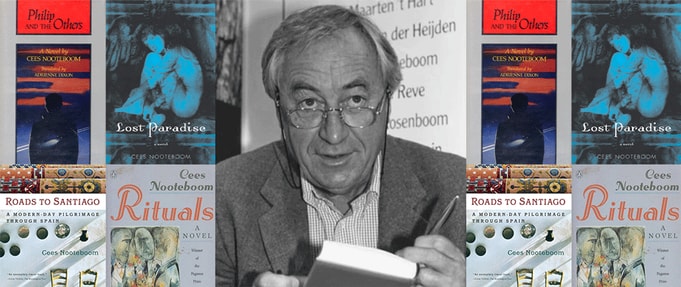

A well-known literary figure in postwar Europe, Cees Nooteboom, has sadly died at the age of 92. His publishing house released a statement last week, stating that he “had passed away very peacefully on his beloved island.”
Across his essays, novels, and travel writings, he drew above all from cultural landscapes, with his travels throughout Europe and beyond. Born in The Hague, Netherlands, he first made a name for himself in his home country with his 1955 debut novel, Philip and the Others, which won the Anne Frank Prize and became a classic of Dutch literature.
Following his second book in 1963, The Knight Has Died, he took a 17-year break from writing novels—in favor of journalism and travel writing—returning with the hit sensation Rituals. Winning the Pegasus Prize, it was his first novel to be translated into English, published by Louisiana State University Press, and was later adapted into a movie, with Dutch director Herbert Curiel at the helm.
Throughout his career, he would be decorated with many honors, including all the major Dutch-language prizes. In 2019, he was awarded an honorary doctorate by University College London.
Nooteboom is survived by his wife, the photographer Simone Sassen, and by over 60 works of enduring fiction that demonstrate his remarkable literary prowess.
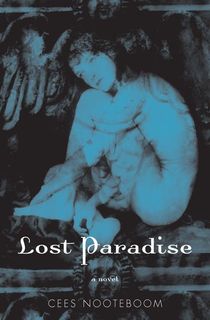
Lost Paradise
From, as put by A.S. Byatt, “one of the great modern novelists,” comes a tale of two unrelated strangers Cees Noteboom observed in his travels, and that he interweaves. Named Alma, a charming woman on a Berlin-bound flight, he imagines she’s leaving her home in São Paulo, after a haunting encounter in one of the city’s favelas.
On her way to Australia, she hopes to put the past to rest and meets Dutch literary critic Erik Zontage in Perth for a conference. When he meets the woman, she is somewhere else, curled up in a ball in a closet, and he does all he can to draw her out. Equal parts “dreamy and self-conscious,” Nooteboom “brazenly explores notions of reinvention, healing, loss, and the divine” (New York Times Book Review).
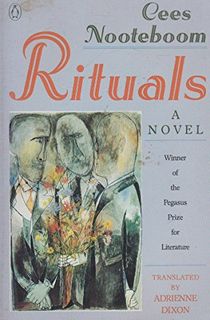
Rituals
Both “intelligent [and] incisive,” Nooteboom brings together the opposing dynamic of order and chaos in Rituals (Washington Post). He tells the story of Inni Wintrop, a man who lives on the edge, railing against the consequences of such, before he meets a man who does not.
Above all, Nooteboom, in his characteristic philosophical, humorous tone, considers the personal routines humans devise to navigate existence—imbuing the meaningless with meaning.
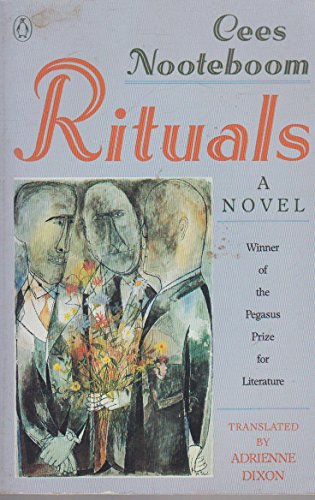
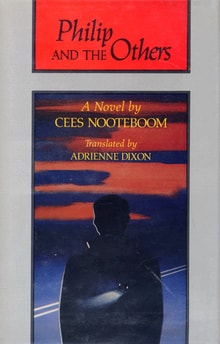
Philip and the Others: A Novel (English and Dutch Edition)
A young man comes of age on a journey through postwar Europe, encountering outlandish people along the way, all while searching for meaning and love. Winner of the Anne Frank Prize, Philip and the Others, ultimately launched Noteboom's novelistic career.
Following his protagonist, Philip, he considers how he is shaped by the experiences and stories he hears, most notably, the pursuit of an elusive girl by a stranger. As described by Publishers Weekly, “Nooteboom has told this story from the inside out, exposing the turbulent depths of his characters.”
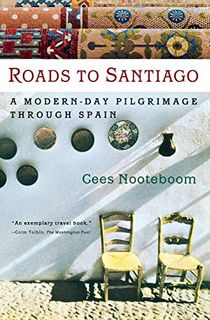
Roads To Santiago
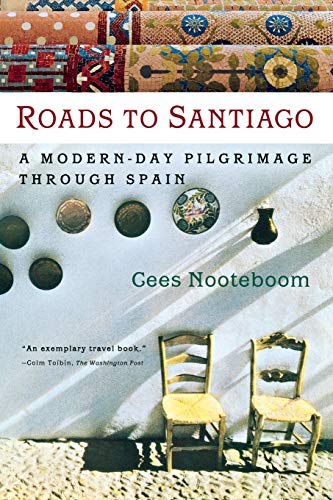
A moving travelogue, Roads to Santiago, captures the five senses of an unexplored side of Spain. Although it documents Nooteboom's travels through architecture, culture, and villages, it is primarily a love letter to his adopted second country.
Considering Spain’s past, with the great spirits of Cervantes, Alfonso the Chaste and Alfonso the Wise, Velázquez, and more, he communicates history with the wit of an adventurer, the depth of a historian, and, of course, his characteristic poetic style.
Featured image: Bernd Kammerer


