
 About
About Deals
Deals Articles
 Genres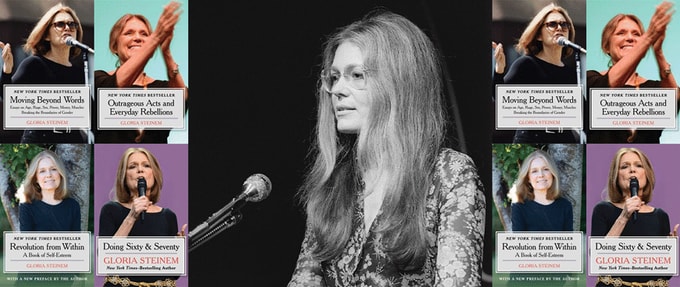

Gloria Steinem, who shaped feminism by igniting the modern women’s movement, passed away on September 2nd at her home in Manhattan. She was 92.
From co-founding the first mainstream women’s magazine to helping create a group that supports women running for office, Steinem’s legacy has—and will continue to—put women’s rights, including issues surrounding reproductive freedom, domestic abuse, equal pay, and more, in the spotlight.
In 2013, President Barack Obama awarded her the Presidential Medal of Freedom, the highest civilian honor in the United States, for her staunch activism. While presenting the award, he said, “Because of her work, across America and around the world, more women are afforded the respect and opportunities that they deserve.” He added, “She also changed how women thought about themselves.”
Growing up in the Midwest, Steinem had dreams of becoming a Rockette. Not until her mid-30s did her passion for advocacy come to fruition. At Smith College, she decided to study government and began reading constantly.
She eventually went to a “speak out,” where women discussed their illegal abortions. Steinem made the choice to be the one making the change—and would later lead protests, deliver speeches, write sharp takedowns, establish shelters, raise money, and so much more.
She went on to begin her career in New York as a freelance writer, where the newsrooms were largely run by men, and women were treated as inferior. Steinem and the other women she worked with were barred from writing about politics and thought, as she detailed in an interview with NPR in 2020, “to be the experts on, you know, food, makeup, babies and celebrities.”
Nonetheless, Steinem didn’t allow these imposed limitations to stop her. Her journalism breakthrough came in 1963, when she went undercover at one of Hugh Hefner’s nightclubs. In her feature for Show magazine, called “A Bunny’s Tale,” she detailed the degrading conditions, rampant sexism, and low pay the women of the Playboy Empire faced—challenging Hefner’s claim that it was a sexual revolution.
She would become a founding editor at New York magazine before launching her own publication, Ms. magazine, widely regarded as the first national magazine written for and about women. The magazine boldly addressed taboo topics like abortion, lesbianism, gender roles, sexual harassment, and more.
Before launching the publication, Steinem, along with other trailblazing feminists—author of The Feminine Mystique, Betty Friedan, Representatives Bella Abzug and Shirley Chisholm, and more—established the National Women’s Political Caucus, focused on passing the Equal Rights Amendment, and electing more women into politics.
She is survived by her close friends, or, as Steinem put it, her “chosen family.”
Women’s liberation remains a massive, collective effort—but there’s no doubt Gloria Steinem played a monumental role in leading the way and building a national platform for feminist issues.

Ms. Gloria Steinem
Spotlighting everything from her journalistic career to being awarded the 2013 Presidential Medal of Freedom, Winifred Conkling offers an intimate behind-the-scenes look at the feminist icon.
A great introduction for the young trailblazers in your life, “this wonderfully detailed biography provides insights into the events that shaped Gloria Steinem’s life and turned her into a groundbreaking advocate for women’s rights” (Booklist).
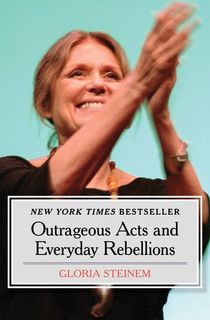
Outrageous Acts and Everyday Rebellions

In the words of the legendary women’s rights activist herself, this New York Times bestselling collection of essays “is—and will always be—a required feminist read” (Susan Faludi, author of Backlash).
Considering the various systems that marginalize women, from “I Was a Playboy Bunny” to the deeply intimate portrait of her mother in “Ruth’s Song,” this is a moving look at her legacy.
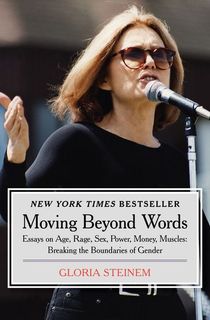
Moving Beyond Words
Throughout Moving Beyond Words, Gloria Steinem challenges the social constructions of gender and race and how they severely limit expressions of cultural identity.
Across the six sections, Steinem demonstrates that her “enduring contribution to the women’s movement has been her ability to popularize feminist issues to a wide and often wary audience” (New York Times).
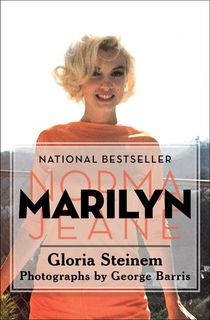
Marilyn: Norma Jeane
Few, upon Marilyn's release, had probed the life of the woman beyond her status as a sex symbol. Gloria Steinem takes a look at Marilyn Monroe—or rather Norma Jeane’s—fragile upbringing, moving from foster home to foster home.
Drawing on a private interview between Jeane and George Barris, the legendary photographer, Steinem offers “an even-handed introduction to the Monroe phenomenon” (Library Journal).
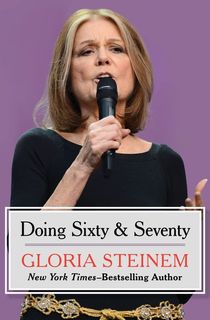
Doing Sixty & Seventy
Gloria Steinem begins Doing Sixty and Seventy with, “One day I woke up, and there was a seventy-year-old woman in my bed.” An essential concern for everyone and everyone, but particularly women, in this book is the topic of aging.
With her characteristic wisdom and charm, Steinem considers a decade she viewed as one of “the greatest adventure of our lives.”
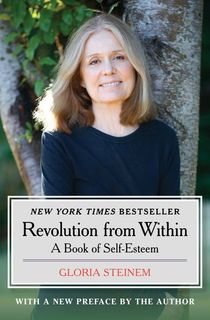
Revolution from Within
Part personal reflection, part revolutionary guide, Revolution from Within seeks out heroes from across history who changed not only their own perspectives but those of others.
What the Los Angeles Times called the “ultimate self-help book,” this is “an ambitious work that makes a significant contribution to the universal theme of the interplay between the individual and society.”
Featured image: Jay Godwin / Wikimedia Commons


