About
 Deals
 Articles
 Genres
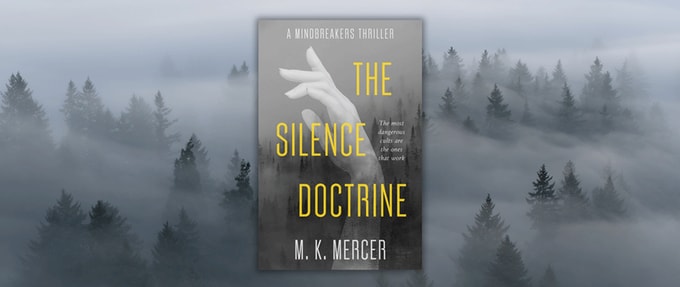
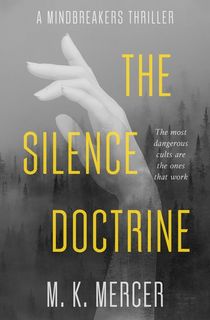
Dr. Lena Calder is the world’s foremost expert on cults. She knows how they recruit, control, and convince ordinary people to surrender everything. Her knowledge of cults is professional—and deeply personal. She was raised in one. Now she takes them down.
South of San Francisco, a mountain retreat offers something the modern world has forgotten how to provide: silence.
Amidst the overwhelm of smartphones, digital addiction, and pervasive mass media, The Solen Center offers people suffering from anxiety, distraction, and stress a unique path to relief.
No phones. No talking. Only the body, the breath, and a focus on one’s hands.
People arrive burned out and leave utterly transformed. The waiting list runs to months.
But unbeknownst to them, inside the therapeutic practice is a secret that turns visitors into future unwitting operatives—committing acts for some of the world’s most dangerous people, with no memory of having done so.
A peculiar nineteen-minute gap in three apparently unrelated crimes leads Lena to the Solen Center. What she finds there suggests thousands of untraceable, unsolved crimes.
But the only way to prove it is for Lena to join.
Read the prologue and first chapter of The Silence Doctrine below—then purchase your own copy of the book to keep reading!
The Nineteen Minutes
Parking garages were never designed to be desirable places, and this one was no exception. Low ceilings. Concrete columns stained with exhaust. Flickering lights. Faded lines. It made the Alderman Grain Processing Facility—the industrial eyesore to which it was attached—look like a vision of beauty.
At precisely 8:17 p.m. on a hot evening in early July, a late-model Ford Mustang rolled down the entrance ramp and parked way in back, beneath one of the many hesitant lights. The bass line of Michael Jackson’s “Billie Jean” filled the air with a groovy thud, offering the dull space some much-needed life, at least until the driver shut off the Mustang’s engine and opened the door.
The driver—male, early fifties—got out, locked his doors, and walked to a spot between two concrete pillars. Here, he pulled a pair of white safety gloves from the pocket of his work chinos and put them on. He did so in a slow, heightened way, almost as if it were part of a performance. The man was entirely his own audience, though, because the parking garage was empty. It always was at this time. He smoothed the material over his fingers and the backs of his hands and arranged the cuffs evenly around his wrists. Satisfied, he dropped his hands to his sides and walked across the parking garage to a door with a security keypad. He knew the number by heart: 6-3-3-4-7. They hadn’t changed it for over two years. Very slack. Maybe he’d make a note of that in his report.
He pushed open the door and walked down a narrow, utilitarian hallway—peeling white paint and exposed pipes—to an elevator lobby, though “lobby” was a grand word for what was essentially a cobwebby recess. There were two buttons: down and up. He pressed the down button with a peculiar, theatrical grace. The elevator was already on this level and the doors opened immediately.
Ding!
The man smiled. He loved when that happened. Who didn’t?
Whistling “Billie Jean,” he stepped into the elevator and rode it down to what those familiar with the workings of the facility called the “mechanical floor.” Like the parking garage, it was a grim concrete space—not occupied by vehicles, of course, but by heavy-duty machinery: water pumps, air suppressors, chains, conveyors, ventilation fans, fire suppression pumps, pressure tanks—the facility’s internal organs. There were rooms, too, including the control room, which the man strolled toward. He expected it to be empty, and it was; the day shift had ended at 7:00 p.m., and the night crew wouldn’t get rolling until nine. The control room was accessed by keycard, which the man kept in the same wallet as his ID. He took it out, held the card to the reader, and the lock clicked open. He went inside.
If everything checked out, he’d be in this room for no longer than two minutes. Fully expecting this to be the case, he crossed to control panel A-3 and lifted off its cover to check the dials inside. All good. No errant readings or signs of malfunction.
“Houston, we are good to go,” he said, and chuckled under his breath.
He wrote his initials, the date, and the time—8:24 p.m.—on the sticker next to the panel, noting the eleven other times he had done so over the last six years. As the regional inspector, he was responsible for checking the readings at this facility every six months. It was one of many on his route, which spanned South Dakota, Nebraska, and Iowa.
As he started to put the cover back in place, he noticed a small, cream-colored envelope taped to the inside of it. He set the cover down, removed the envelope, and opened it. There was a card inside. The man’s breathing changed, developing an unusual, rhythmic pattern that was almost musical. He took the card out and looked at it.
There was a symbol on the front—not a picture, not a letter, but a hieroglyph of sorts: curious, curling lines drawn in ink. It was both crude and oddly elegant. The man’s posture changed immediately. His head snapped backward and his eyelids fluttered, as if the nerves keeping them open were misfiring. After a moment, his pose realigned and his eyes cleared. He slipped the card and envelope into his pocket and walked across the room to a wall of dials, switches, knobs, and hatches.
He opened a hatch—labeled E-7 SENSOR—on the right side of the wall. Motes of dust spiraled upward, quite colorful in the blinking lights. In a slow and graceful way, the man moved his hands so that his palms met in the middle of his chest, his fingers pointing forward. He was otherwise still, but energy and purpose flowed through him.
The man breathed in and out slowly, then reached out with one hand. It appeared to float, and to his own eyes looked not quite connected to his body—a ghost-hand wearing a white safety glove. He curled three fingers toward his palm and moved his thumb and forefinger closer together, as if to pluck a petal from a flower. There was a calibration pin inside the hatch, which—like everything on this wall and indeed everything on the mechanical floor—served a specific and important function. The man’s thumb and forefinger closed around the pin in a delicate pincer movement and moved it ever so slightly out of alignment.
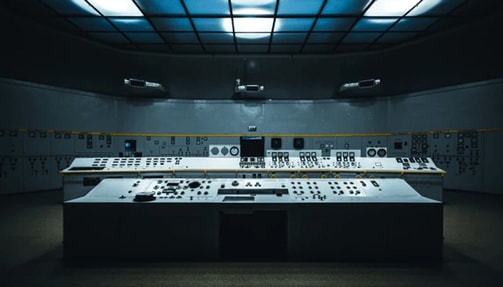
 Photo Credit: Pexels / Canva
He brought his palms together again in front of his chest and breathed deeply for a full minute. Relaxation washed through him—a cool wave that lifted a sigh from his chest. He closed the E-7 sensor hatch, put the cover back on control panel A-3, and exited the control room.
Moments later, he was strolling across the parking garage toward his Ford Mustang. He stopped in the same spot between the two concrete pillars—outside any camera’s field of view—and performed a sequence of arm movements. They were elaborate without feeling unnatural. His eyes were fluttering again.
All at once, like snapping out of a daydream, he found himself standing at the driver’s door of his Mustang, taking off his safety gloves. Before tucking them back into his pocket, he checked his watch: 8:43 p.m.
Nineteen minutes had passed since he’d initialed the inspection sticker. Nineteen whole minutes that he couldn’t reasonably account for.
“Strange,” the man said, but he was in good spirits, so didn’t think any more of it—just got into his car and started the engine. Michael Jackson picked up where he’d left off, assuring his devout listeners that the kid was not his son. The man sang along as he drove out of the parking garage.
That night, he burned the card and envelope in an ornate incense brazier he’d purchased on Amazon, which was remarkably similar to the ones they used at the Solen Center. He did this with all correspondence he received from his friends at the wellness retreat, as part of a meditative practice. Watching the smoke curl put his mind in a state of calm.
He didn’t think about the hatch, what the pin was for, or why it was moved, because he didn’t know he’d moved it. He just watched the smoke rise from the burning envelope, feeling entirely at peace.
Ten days later, while scrolling through his usual news feeds, the man was shocked to see that the Alderman Grain Processing Facility in Sioux Falls was on fire. Emergency response teams from three counties were on site, tirelessly working to put out the flames. Damage was extensive, with at least half the building destroyed.
That’s on my route, the man thought. Everything checked out the last time I was there. Shipshape. Buttoned up. Houston, we are good to go.
Many months would pass before he learned what had actually happened.
Chapter One
The students at the University of Chicago referred to it as Cults 101. The correct name for the class as it appeared in the academic catalog was Psych 4214: Control, Belief, and Organizational Influence. It was invariably popular and oversubscribed. Those fortunate enough to have been added to the roster would receive a note under their dorm door at midnight, two days before the introductory class session.
This, of course, was highly unorthodox, and engendered a sense of mystery and excitement.
The note, in itself, only added to the curiosity. It appeared to be a photocopy of a worse photocopy of a hand-drawn flyer. It had an old-world quality that some thought was kinda cool, kinda kitsch. Others thought it was downright creepy.
The note read:
Something is missing from your life.
You know it.
You have always known it.
You go through the motions of your daily life,
waiting for The Signal.
If this is you,
You have been Called.
Below this was the location in which the class was to take place. Nothing unusual there. The time, however, ramped the intrigue factor—already high—up several notches:
2 a.m.
And that was all she wrote. Literally and figuratively. There was no signature, no course number, and certainly no professor’s name.
Bizarre, no doubt.
This was just the beginning.
Most of UChicago’s psychology programs took place within the conjoined halls of Kelly, Green, and Beecher. Cults 101, however, was held away from the principal complex, in a gloriously gothic building on East Fifty-Sixth Street. It was a popular selfie spot by day; its complement of greenery and formidable arches made for an impressive background. But there was an eeriness about it after the sun went down, to the extent that pedestrians would often cross the road rather than walk too close to it.
The selected students displayed their eagerness to learn—and the desire to have their curiosity satisfied—by showing up early. They were all gathered outside by 1:45 a.m., standing in ones and twos, some shifting uncomfortably, others more assured. An air of excitement prevailed, though. They were twenty-three strangers, for the most part, belonging to different majors, dorms, backgrounds. They wore torn denim, corduroys, piercings, turbans, punk jewelry, blackwork tattoos. A few looked older, slightly worn down by the travails of the world. One of these carried a small African drum—a djembe—under one arm. Another was barefoot and had dreadlocks that reached the small of her back.
The minutes ticked by. The students checked their phones for the time. There wasn’t much in the way of conversation.
At precisely two o’clock, the slightly older man (distinctly un-student-looking) with the djembe started to lay down a beat—a single rhythmic thump repeated over and again, slightly faster than a resting heartbeat. He held the instrument in such a way that the sound carried across the building’s courtyard and rolled almost mystically within its deep arches. It was mesmerizing. After a couple of minutes of this, the drummer added little flourishes, using the heel of his hand and the tips of his fingers to create richer, more elaborate patterns.
The barefoot woman started to spin, slowly at first, her arms extended and her dreadlocks whipping. Her movement was free, completely unselfconscious—beautiful for that reason. There was no sense of it being a performance, more an unburdening, as if the invisible chains holding her in place had suddenly broken.
The students watched, but it wasn’t long before more chains broke, and the unburdening—or whatever this was—passed between them. A twenty-year-old sociology major named Brian Locke was the next to start spinning. He wore a Metallica T-shirt and was more inclined to headbang than spin . . . yet here he was with his arms extended, spinning on the spot and looking up at the stars. It was as if something had called to him from within the drumbeat—some enticing and unchallengeable force.
It caught on quickly. Two more students started to spin. Like Brian, they couldn’t help themselves. They simply surrendered to it. Another student joined in, giggling as she pirouetted and the sky blurred above her. The drumbeat got louder, or at least it felt that way. It came through the ground and shook the trees. The barefoot woman’s movement evolved. She went from spinning to swaying, and then dancing in a slow, esoteric fashion. Brian would later think that she resembled a charmed snake emerging from its basket. Her eyes were wide and pale. She danced with greater abandon yet, lifting her knees, shaking her limbs. She rolled her head and her dreadlocks windmilled, the tips flicking off the ground as she swooped low.
Within minutes, all the students were dancing. They joined in one by one, some enthusiastically, others more reluctant, others still with a degree of self-consciousness. They surrendered to it, however, because it was harder not to. All inhibitions were cast aside. Or perhaps momentarily veiled.
They only noticed that the building’s front door had creaked open when the drummer led them inside.
The drummer took them—still swaying and dancing—down a winding stairway, then along a rich, brown corridor to a lecture hall. It was an expansive room, low-lit and empty, but strangely warm. Broad wooden steps descended to an oddly characterless stage. There was no lectern or podium, only a circle of folding chairs facing away from one another. In here, the drumbeat was fuller, almost deafening. It was like being in the chest cavity of some goliath beast, its heart galloping after the hunt.
They reached the stage and stood in a loose, spiraling oval around the chairs. All at once, the drumbeat stopped, and the silence was so jarring that the students rocked on their heels, disoriented for a moment. The drummer sat in one of the chairs, his face serene, his instrument resting in his lap. With the same impetus with which they felt the need to dance, the students settled into the remaining chairs. Seated as such, coupled with the low light and the new silence, the students’ sense of being a part of a group diminished. Each was only aware of the person on either side. The room’s spatial grammar had been inverted, and that sense of disorientation deepened.
The silence continued for a moment.
And then . . . a voice.
It was amplified, but not to the point of distortion. The students looked around, trying to locate its source. It came from everywhere and nowhere. Otherworldly and resonant, yet somehow soothing. The mystery and apparent incorporeality of the voice only increased the significance of what it was saying.
In the coming days and weeks, the students would try to reconstruct what was said, with each remembering it slightly differently. The beginning was particularly elusive—perhaps because it was so late, or because they were oddly disoriented—but there was one thing on which they all agreed:
The voice started with questions.
“Have you ever had the feeling of being alone in a crowd? More often than you would care to admit, even to yourself? Are you struggling to fit in? Do you worry whether people accept you, or just tolerate you? Do you feel that people are silently judging you?”
Some students sat with their eyes closed. Others stared up at the auditorium’s vast and dark ceiling. A few continued to look around, still trying to calculate where the voice was coming from. They were all silent, though. Enraptured, or perhaps captured.
“When you enter a room and people stop talking for a moment, do you think they were talking about you?”
Several nods. One student dabbed beneath her eyes with the tips of her pinkies. Another covered his mouth with a trembling hand.
“Do you have thoughts you don’t dare share? What if you never find your tribe? If you were to disappear, would anyone care? Would anyone even notice?”
There was a pause. It didn’t last long, but it stretched in an inexplicable and discomposing way. It was as if time itself had been altered, each second lasting three or four times longer than it should. When the voice resumed, its tone had changed, becoming deeper, more intimate.
No more questions. It peeled away layers and looked inside.
“That thing you do . . . you know, when you’re alone . . . that thing that no one knows you do. Your coping mechanism. That’s what it is, right? It’s how you make it through another minute. Another hour. Another day.”
Several students trembled or shook their heads or wiped tears away, and some did all these things.
“You know it’s not good for you. But no matter how many times you’ve tried to stop, you just can’t. You feel weak and ashamed, but that’s okay. That’s simply your need to be seen and understood crying out.”
Another time-stretch, not as long as the last but equally discomposing. The voice came back, quieter, softer. Brian—the front of his Metallica T-shirt damp with sweat—cupped his skull with both hands. It felt, for all the world, like the voice was coming from inside his head.
“I see you,” it said. “I hear you.”
Groans. Murmurs. More tears.
“I understand you.”
A light flicked on at the top of the auditorium, behind the last row of seats. Clothes rustled, and chair legs scuffed across the floor as the students facing the wrong way turned around to look.
A figure, tall and imposing, with a perfect posture and powerful shoulders. With the light behind her, and thirty feet higher than the students sitting on the stage, she appeared to be caught midflight, hovering in the still and shadowy air, almost goddesslike.
Dr. Lena Calder had been the voice for eighteen academic quarters, in twelve different venues (and unique instances) over six school years.
Beguiling.
Confident.
Enigmatic.
There was a sense that she could call upon the clouds to rain or stop a river with a sideways glance. She was both esoteric and yet approachable. Her green eyes glittered whenever she spoke.
“I’m going to ask you to do something,” she said to the students below. It was her natural voice, no longer amplified, but reaching each set of ears with the minimum of effort. “Don’t worry. It’s just a small thing, and it will help you.”
They looked at her. Some were already nodding.
“Reach beneath your seats,” Dr. Calder said, with a subtle but appreciative glance at her teaching assistant, Nadia, sitting in the back. “You’ll find a piece of paper and a pencil.”
Nadia’s strong, dark eyes twinkled. A former Theater and Performance Studies major, the young TA was a natural at this. She reminded Lena of a professional version of herself at that age. Just without some of the quirks that came from being the daughter of Dr. Adrian Calder. And from having escaped his cult.
More rustling and scuffing sounds as the students explored beneath their seats, finding the piece of paper and pencil secured there by a small piece of tape. They removed them, peeling the tape back carefully, then sat waiting for their next instruction.
It came. Lena’s voice had changed subtly, now cajoling . . . maternal.
“Close your eyes. All of you.”
The students obeyed at once. They could almost hear their eyes click shut.
“Good. Now breathe in. Nice and deep, to the top of your lungs. Hold it for a moment, then exhale.”
They did, and with an uncanny synchronicity, as if they had done this together multiple times.
“And again.”
Lena joined them for half a dozen breaths. The sound filled the auditorium, a pneumatic hiss and sigh.
“Good. One more. In . . . then out . . .”
Then stillness. Not so much as a tick.
“I want you to do something,” she said a moment later, her voice less maternal but still utterly entrancing. “Not for me, but for yourself.”
Lena paused again, letting this sink in. The students were perfectly motionless, their faces waxlike in the subdued lighting.
“Now. I want you,” she continued, “to think about the lowest point in your life. Your worst moment. You know which one. I want you to recall it now with absolute clarity. Remember where you were—what you were seeing and hearing.”
Again, the students did what they were told, and now there was movement among them. Lips peeled back from gums. Uncomfortable shuffling. Some flinching.
“Relive it. Feel it. Remember where you were standing, or sitting, or lying.” A tense beat, then Lena said, “Or crawling.”
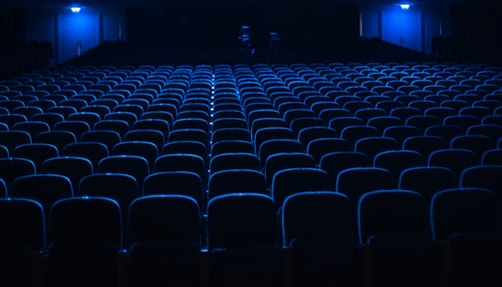 Photo Credit: Getty Images / Canva
Some of the students groaned. A young woman with a prosthetic leg arched back in her seat so that her long hair almost touched the floor behind her. Her name was Sophie, twenty-two years old, studying political science. She’d been among the first to spin—not too far behind Brian. Some people were more impressionable than others.
“Now. Remember,” Lena continued, “in that moment, your absolute worst moment . . . what was your deepest wish?”
There was a shift in the tension. Some of the groaning—the flinching, the uncomfortable shuffling—stopped. Sophie inhaled deeply and straightened up in her seat.
“Now. Write that desire, that thing you most needed, on the piece of paper.” Lena’s tone sharpened. “Resist the urge to open your eyes. Just write. It doesn’t matter whether it’s legible. The most important thing is that you get it down.”
Erratic scratching sounds as the students scribbled on their pieces of paper, using their thighs or the palms of their hands to lean on. It took seconds, ten at the most, then they were all motionless again.
“Now. Take the pencil in your nondominant hand and hold it above your head. Stretch as high as you can.”
Twenty-three arms hit the air, reaching high.
“I’m going to count down from four,” Lena said, her voice as clear and fresh as rain on a window. “Then I’ll say a two-syllable word that begins with the letter R and ends with the letter E. When you hear that word, throw the pencil as far away from you as you possibly can.”
There were some nods to show that they understood. The arms wavered, pencils quivering in clutched hands.
“Not yet. Keep stretching.”
They kept stretching.
“As you throw the pencil, make a noise. Not just any noise, but the noise you need to make.” Lena inhaled, taking her time, extending the moment. It might seem like she was enjoying this, but everything—every breath, every word—was measured precisely and had a meaning. “Loud or quiet, long or short, it doesn’t matter. But put the entire experience of your worst moment into that noise. Every. Painful. Second.”
Their eyes closed, their arms reaching. They were ready.
“Do not open your eyes until I tell you,” Lena said, then started her countdown. “Four . . . three . . . two . . .”
Another pause. Breaths were held. The anticipation was almost visible, shimmering above the students like a soft, silver cloud.
“. . . One.”
And then, in a whisper that should have been too quiet to hear but was heard anyway:
“Release.”
The sound was beyond description. A sonic eruption. Groans, unintelligible yells, expletives, birdlike ululations, shrieks, whistles, broken pieces of song . . . the cacophony of twenty-three people externalizing simultaneously, punctuated by the clatter of twenty-three pencils bouncing off the walls, the steps, the floor—whatever they hit, then rolling until they stopped.
Lena waited until there was silence. And it came like the wind, blowing slowly and warmly through the auditorium. The students appeared to relax into it, their bodies slack and satisfied.
“Now open your eyes,” she said.
As ever, they obeyed. Brian was the last to, but he was deep in his own mind, and resurfacing felt like climbing out of a well. Or maybe a grave. Looking around, blinking his eyes, he saw that everyone else was looking at him. It was neither intimidating nor unkind. They were simply waiting.
The lights came up. The students shielded their eyes, slowly adjusting to the new brightness, but as soon as they could, they looked toward the top of the auditorium. The professor of cult psychology had not moved. They couldn’t make out the small details from this far away—the light freckles across her nose, a crescent-shaped scar on her chin, the striking color of her eyes—but her long chestnut hair was impossible to miss. It was adorned with an orchid-shaped clip and fell over one shoulder, curled toward the lapel of her shirt like a cat’s tail.
She was, as the students expected, entirely captivating. All eyes remained on her as she walked half a dozen steps toward a whiteboard, removed a black marker from a tray at the bottom, and wrote in big, bold letters:
WHAT
JUST
HAPPENED?
She regarded the three words for a moment, then looked again at the students—not as a group, but one by one. As she walked down the auditorium’s center aisle toward the stage, she sequentially assessed twenty-three spellbound faces. She said nothing, only studied them, her own green eyes blazing.
Time moved strangely again. That moment could have lasted twenty seconds or twenty minutes. This was something else they later tried to reconstruct but could not collectively agree on.
Lena smiled at the students, and at Nadia. It was a small gesture, but warm, and there was a suggestion in her expression that the Autumn Quarter was still young, and they were just getting started. She popped the cap back on the marker with a surprisingly loud click, then exited the auditorium through a door to the left of the stage.
Twenty-three pairs of eyes turned back to the whiteboard.
What just happened?
Want to keep reading? Purchase your own copy of The Silence Doctrine below!
____________________

____________________
The Silence Doctrine